
Buddy checks that actually happen
Everyone learns the buddy check; fewer divers still do it two hundred dives later. The check works when it is short, physical and mutual — not a mumbled abbreviation.
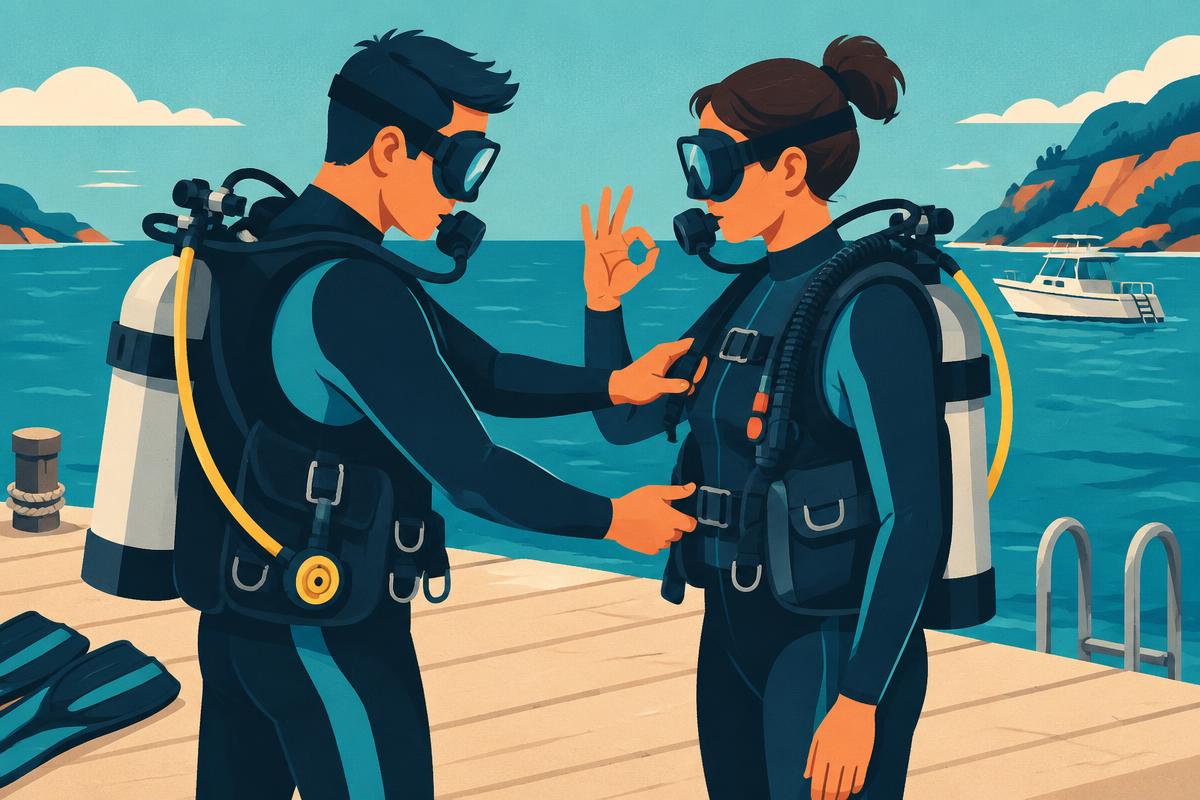
The check is a habit, not a formality
Follow the pre-dive check sequence taught by your training organisation, adapted to your actual equipment. A check performed from memory alone drifts over time; use your agency’s current mnemonic or a written card if you are unsure.
Make it physical
Touch what you check. Breathe from both second stages while watching the pressure gauge, operate the inflator and deflator, and put a hand on the weight system and releases. Looking is not checking.
Check your buddy’s configuration as if you will need it — because in an emergency you will. Know where their alternate air source lives, how their weights release and how their drysuit or wing valves behave.
Adapt it to the dive
A shore dive in familiar water and a drift dive from a RIB do not need identical emphasis. Add the points the day demands: reel and buoy, torch and backup, exposure suits, entry plan.
Repeat the key parts after kit changes. A new computer, a borrowed cylinder or a different harness quietly invalidates the check you did last weekend.
Keep the culture alive
Experienced divers set the tone. When the most qualified person on the boat still asks for a check, nobody else feels embarrassed to do the same.
If a buddy waves the check away, treat it as useful information about how the dive will go. Calm, consistent divers welcome two minutes of mutual verification before the water.
Dive-day checklist
Before every entry
- Breathe from both second stages while watching the gauge
- Operate inflator, deflator and dump valves
- Confirm weights are present and releases are clear
- Locate each other’s alternate air source
- Agree the plan, signals and turn pressure
General guidance only. Follow your training, the dive operator’s procedures, and each manufacturer’s current instructions.
Ask the dive guide
Personal guidance for your next dive
Describe a dive scenario or an equipment-care question. The guide answers in your language and points you to relevant journal articles.
General educational guidance only. It is not medical advice, emergency instruction or a replacement for training, certification, manufacturer instructions, your operator's briefing or your dive plan.