
Cameras and buoyancy control
A camera changes how you dive. It adds task load, tempts you toward the reef and quietly degrades buoyancy habits — unless you build a few rules around it.
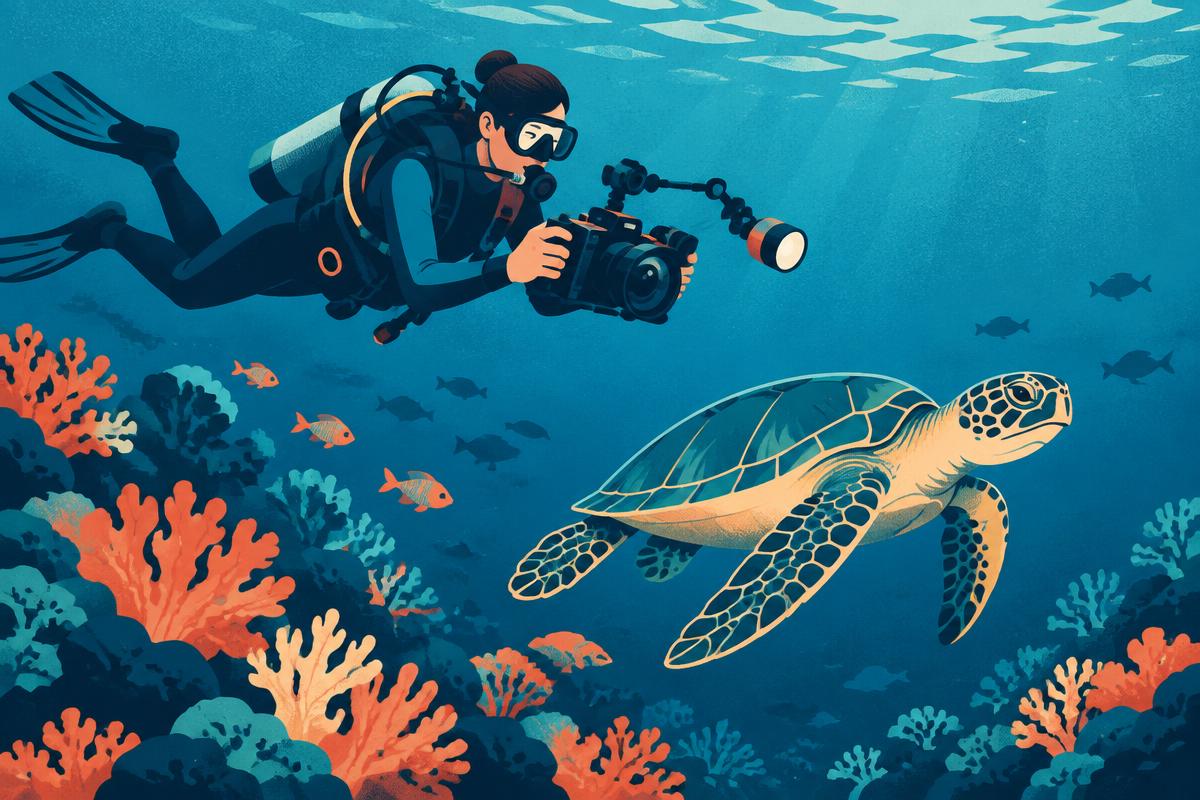
The dive comes before the photograph
Never sacrifice buoyancy control, gas planning or buddy contact for an image. If a shot requires touching the reef, exceeding your training or separating from your buddy, the shot is not worth taking.
Master the basics first
Add a camera only after your buoyancy is reliable without one. Hovering motionless, controlling ascent rate and holding position in mild current should be automatic before a second task competes for your attention.
Start with a small, simple camera on easy dives. Large housings, strobes and trays change trim and drag; introduce them gradually and re-check your weighting with the full rig.
Rig for hands-free moments
Use a lanyard or clip so the camera can be secured when you need both hands — for a mask clear, a gas switch or a signal. A dangling camera across the reef damages coral and snags on lines.
Keep the setup streamlined against your body while finning. Extend it only when you are stable, neutrally buoyant and clear of the bottom.
Protect the environment and the team
Good buoyancy is the best conservation tool a photographer owns. Stay off the bottom, keep fins high and never hold or lean on anything living to steady a shot.
Tell your buddy before the dive how you will work: how long you may stop, how you will signal, and how you will regroup. A buddy staring at a screen is easy to lose; agree to check in often.
Dive-day checklist
Before diving with a camera
- Confirm buoyancy skills are solid without the camera
- Check O-rings, seals and battery before the dive
- Rig a lanyard or clip for hands-free moments
- Re-check weighting with the complete rig
- Agree signals and check-in rhythm with your buddy
General guidance only. Follow your training, the dive operator’s procedures, and each manufacturer’s current instructions.
Ask the dive guide
Personal guidance for your next dive
Describe a dive scenario or an equipment-care question. The guide answers in your language and points you to relevant journal articles.
General educational guidance only. It is not medical advice, emergency instruction or a replacement for training, certification, manufacturer instructions, your operator's briefing or your dive plan.