
Continuing education paths
Diving is a journey of lifelong learning. Whether you want to specialise or master new techniques, there is a course to help you achieve your goals.
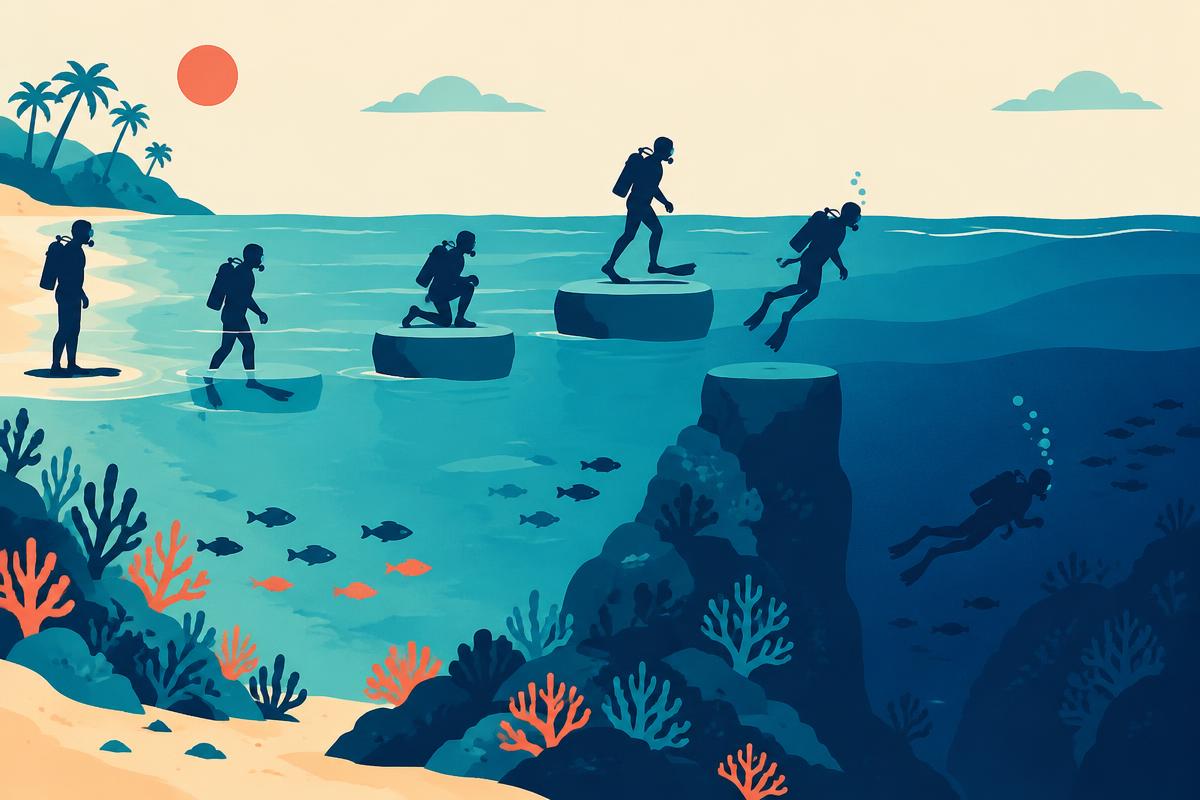
Training is for your safety and confidence
Continuing education expands your skillset and awareness, which are vital for safety. Always choose courses that align with your interests and the environments you dive.
Specialty courses
Specialty courses allow you to focus on specific interests, from underwater photography and navigation to wreck diving or enriched air. These courses provide the focused knowledge needed to dive safely in those environments.
Choose specialties that genuinely interest you. When you are passionate about the topic, you are more likely to retain the skills and apply them correctly.
Advanced and rescue training
Moving beyond entry-level training builds confidence and competence. Advanced courses introduce you to deeper or more complex diving scenarios, while rescue training provides the skills to manage emergency situations.
Rescue training, in particular, is highly recommended for all divers. It shifts your focus from just taking care of yourself to being a capable member of a dive team.
Choose your path
Talk to your local dive shop about your goals. They can recommend a structured path, ensuring you build your experience and skills in a logical, safe order.
Diving is about enjoyment. Don't feel pressured to rush through certifications; take the time to practice and master each level before moving on to the next.
Dive-day checklist
Planning your progress
- Identify your interests and goals
- Consult an instructor about a path
- Complete rescue training
- Practice skills between courses
- Focus on mastery, not just certification
General guidance only. Follow your training, the dive operator’s procedures, and each manufacturer’s current instructions.
Ask the dive guide
Personal guidance for your next dive
Describe a dive scenario or an equipment-care question. The guide answers in your language and points you to relevant journal articles.
General educational guidance only. It is not medical advice, emergency instruction or a replacement for training, certification, manufacturer instructions, your operator's briefing or your dive plan.