
Dive computer setup
Your dive computer is your primary tool for monitoring depth and time. Correct configuration before entering the water is essential for safe decompression management.
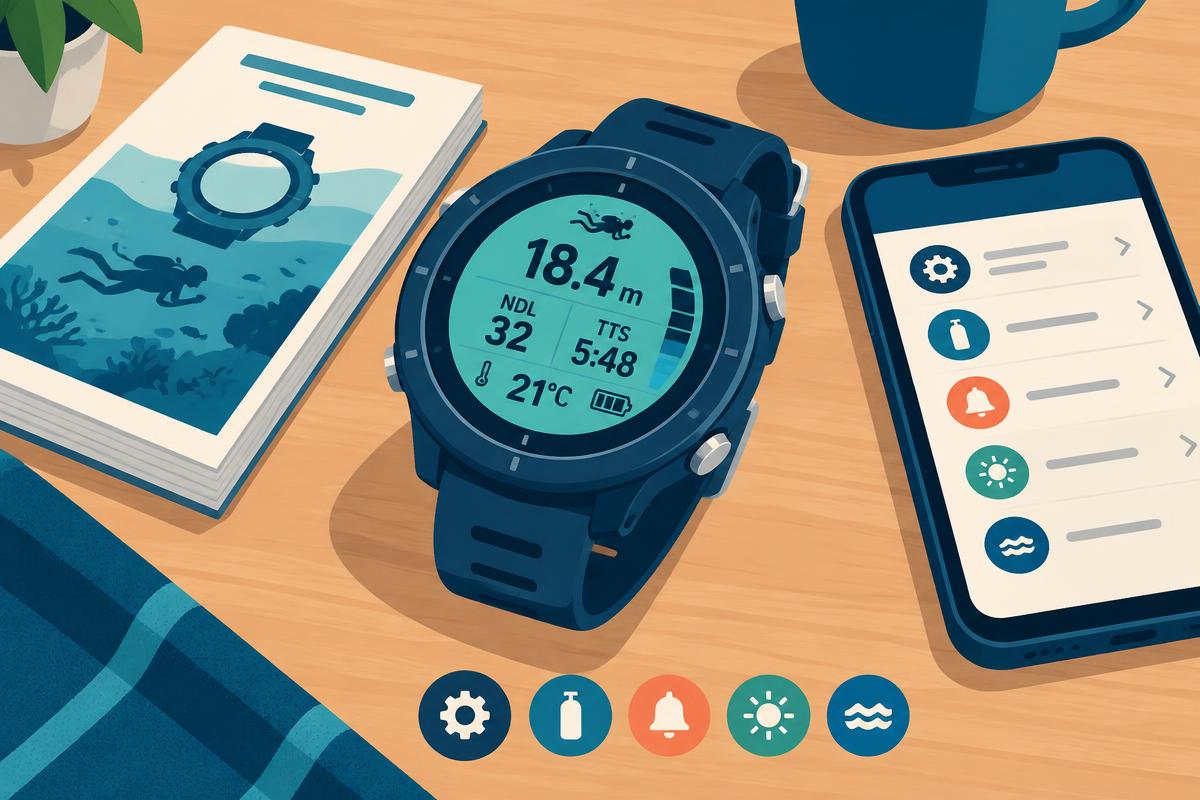
Understand your computer
Always read the manufacturer’s manual for your specific computer model. Never share a computer or switch settings mid-dive, as this will invalidate its decompression calculations.
Basic configurations
Start by setting the correct date and time, as these are critical for logging and surface interval calculations. Ensure the measurement units (metric or imperial) match your preference and training.
Check the battery level before every dive trip. Many modern computers offer user-replaceable batteries, but some require professional service to maintain their depth-rating integrity.
Gas and conservatism
If you are diving with Enriched Air Nitrox, verify that the oxygen percentage is set correctly to match your tank analysis. Failing to do this can lead to incorrect depth limits and decompression data.
Adjust the conservatism settings according to your physical fitness and the dive conditions. Increasing conservatism adds a safety margin by calculating more conservative no-stop limits.
Alarms and displays
Configure your alarms for depth, time, and ascent rate to provide audible or vibration alerts during the dive. These reminders help you stay within your planned profile without constant monitoring.
Ensure you understand how to navigate the display and access secondary information like water temperature or battery status. Familiarity with the interface reduces stress in the water.
Dive-day checklist
Computer setup checklist
- Verify battery level is sufficient
- Check date and time settings
- Confirm gas mix matches tank analysis
- Set desired conservatism levels
- Test audible and visual alarms
General guidance only. Follow your training, the dive operator’s procedures, and each manufacturer’s current instructions.
Ask the dive guide
Personal guidance for your next dive
Describe a dive scenario or an equipment-care question. The guide answers in your language and points you to relevant journal articles.
General educational guidance only. It is not medical advice, emergency instruction or a replacement for training, certification, manufacturer instructions, your operator's briefing or your dive plan.