
Mastering Underwater Propulsion: Frog Kick, Flutter, and Back Kick
Efficient finning is foundational to responsible diving, conserving air, and protecting delicate marine environments. Explore the practical applications and proper execution of essential fin kicks to enhance your underwater journey.
Your Safety, Our Priority: Consulting Experts is Key
Before attempting new finning techniques or making significant changes to your diving practice, always consult with a certified diving instructor. Your dive training agency provides invaluable guidance for safe and effective skill development. Ensure your fin equipment is correctly fitted and maintained according to manufacturer guidelines. If you experience any discomfort or physical strain, discontinue the activity and consult a medical professional. Siebe Gorman encourages all divers to prioritize their well-being and adhere strictly to established safety protocols.
The Efficient Frog Kick: A Gentle Glide
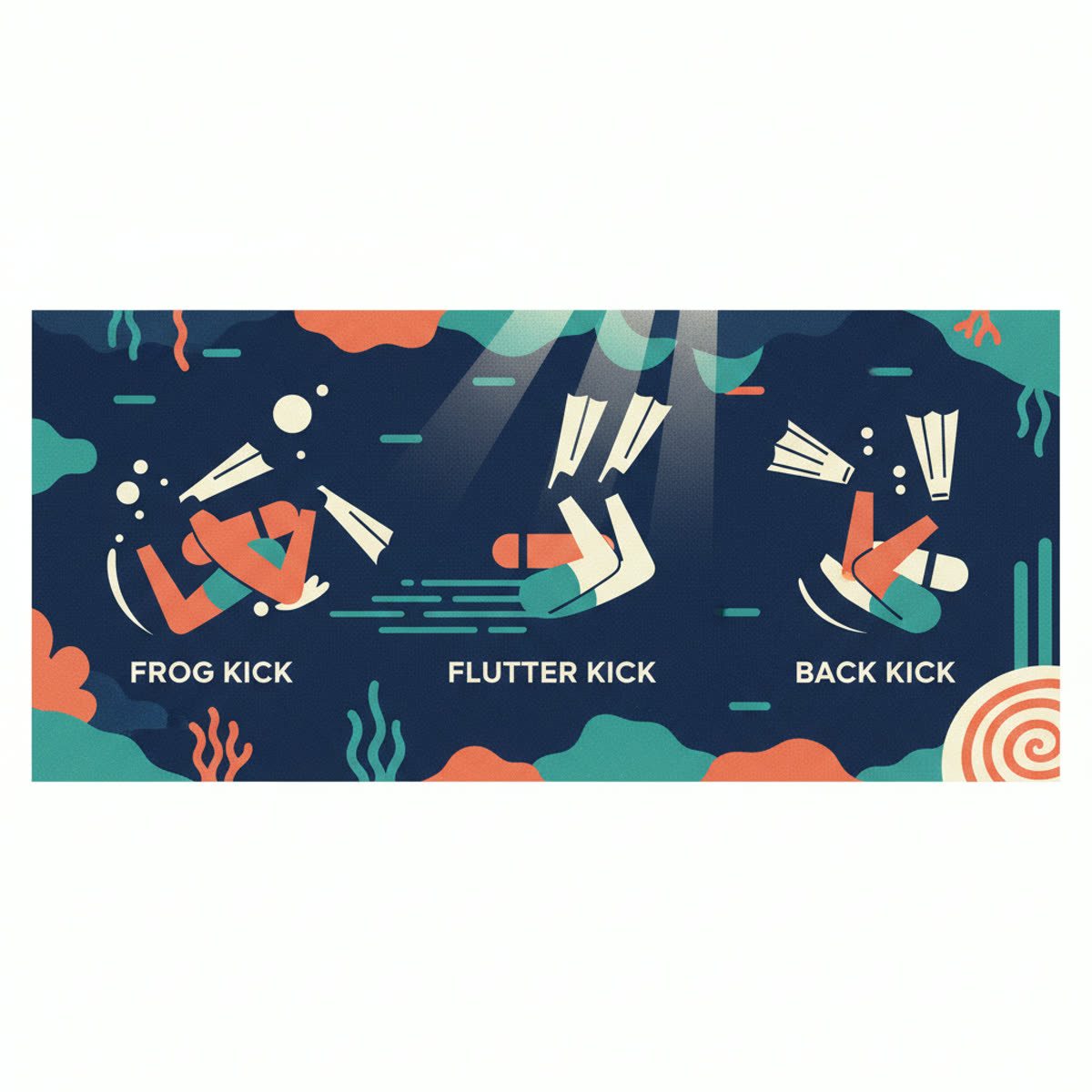
Often favored for its efficiency and minimal disturbance, the frog kick is executed with bent knees, drawing the fins towards the body, then extending them outwards and backward in a sweeping motion. This technique propels you forward smoothly while keeping your fins elevated, reducing the risk of stirring up sediment or accidental contact with coral.
It is particularly advantageous in confined spaces, overhead environments, or when maintaining a precise trim is paramount. Training agencies frequently emphasize the frog kick for its air-saving potential and its role in fostering better buoyancy control. Manufacturers design fins with varying stiffness and blade shapes that can influence the effectiveness of this kick, so understanding your equipment is crucial.
The Versatile Flutter Kick: Powerful and Adaptable
The flutter kick is perhaps the most widely taught and recognized finning technique, characterized by alternating up-and-down movements of the legs from the hips. It provides robust propulsion and is highly versatile, suitable for covering distances or when needing to exert more power against currents.
While effective, care must be taken to avoid an overly exaggerated motion, which can increase drag and energy consumption. Proper technique, as taught by certified instructors, focuses on a controlled, streamlined movement to optimize efficiency and prevent undue leg fatigue. Regular practice, as recommended by training agencies, will refine your flutter kick for different diving scenarios.
The Precision Back Kick: Maneuvering with Control
The back kick is an invaluable skill for advanced maneuverability, allowing a diver to move backward without turning around. It is executed by sculling the fins, often with a modified frog kick motion reversed, or by using a short, controlled flutter kick in reverse. This technique is especially useful in tight spaces, during photography, or when fine-tuning position near a fragile subject.
Proficiency in the back kick requires practice and good body control, typically covered in specialized training courses. Consulting with your instructor for guidance on this advanced skill is highly recommended. Mastering this precision movement contributes significantly to a diver's overall situational awareness and ability to protect the underwater environment.
Dive-day checklist
Pre-Dive Fin Check & Technique Readiness
- Confirm fins are correctly sized and securely fitted to avoid chafing or loss.
- Review dive plan to anticipate finning requirements for the environment.
- Practice finning techniques in a controlled environment (e.g., pool) before open water.
- Ensure proper trim and buoyancy before initiating advanced maneuvers.
- Consult with your dive instructor for personalized feedback on your technique.
General guidance only. Follow your training, the dive operator’s procedures, and each manufacturer’s current instructions.
Ask the dive guide
Personal guidance for your next dive
Describe a dive scenario or an equipment-care question. The guide answers in your language and points you to relevant journal articles.
General educational guidance only. It is not medical advice, emergency instruction or a replacement for training, certification, manufacturer instructions, your operator's briefing or your dive plan.