
Hydration and diving safety
Dehydration is a known risk factor for decompression sickness. Maintaining proper fluid balance is essential for effective nitrogen off-gassing and overall physical performance underwater.
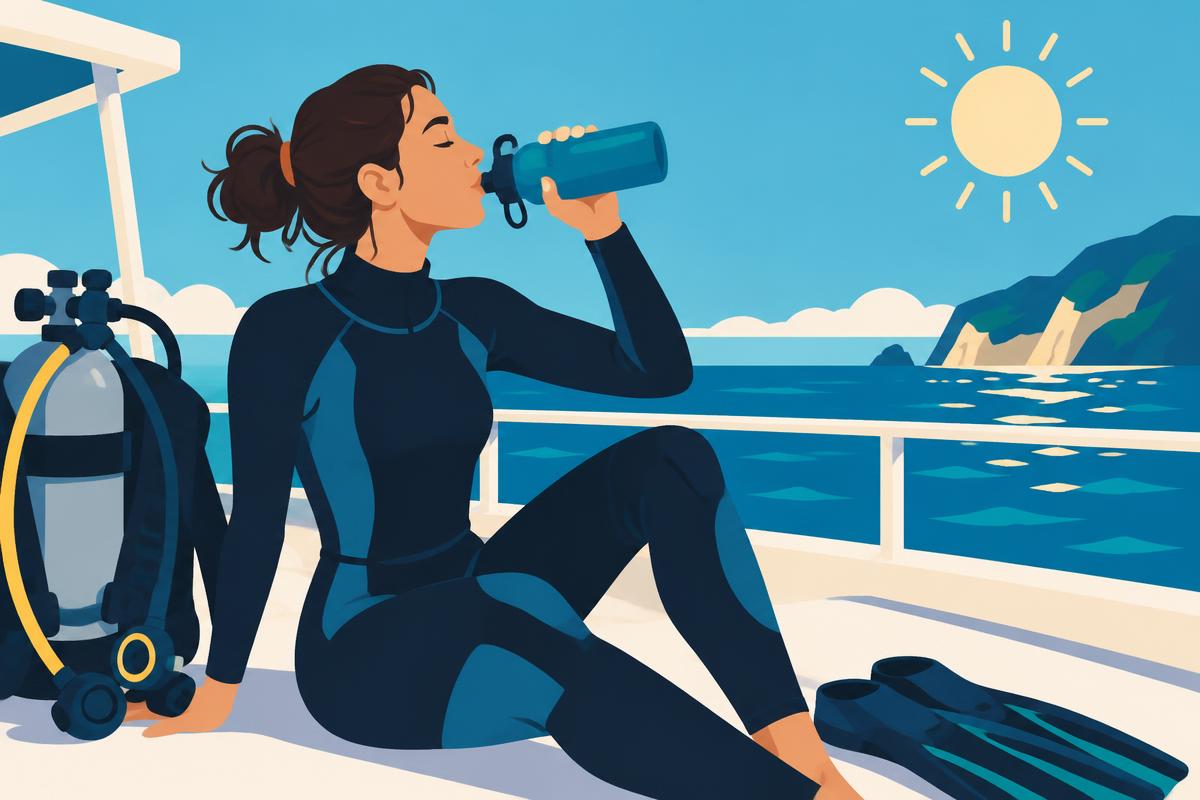
Hydration supports decompression safety
Drink water regularly throughout the day, even if you do not feel thirsty. Avoid excessive caffeine or alcohol, as these can contribute to dehydration and mask early symptoms of diving-related issues.
The physiology of hydration
Water is essential for maintaining blood volume and circulation, which in turn facilitates the transport and elimination of nitrogen. Dehydrated blood can become more viscous, potentially slowing the off-gassing process.
Diving itself can lead to fluid loss through immersion diuresis and breathing dry tank air. The body naturally loses water through the lungs as it humidifies the air you breathe from your regulator.
Identifying dehydration
Thirst is a late indicator of dehydration; if you feel thirsty, you are likely already fluid-depleted. Monitor the color of your urine as a more accurate guide, aiming for a pale, clear straw color.
Be aware that factors like sun exposure, wind, and heat on a dive boat can accelerate fluid loss. Even in cold water, wearing a thick wetsuit or drysuit can lead to significant sweating during gear assembly.
Practical hydration habits
Start hydrating well before your first dive of the day and continue to sip water between dives. Electrolyte-replacement drinks can be beneficial after multiple days of intense diving or in very hot climates.
Moderation is key; avoid drinking vast quantities of water all at once, which can lead to other complications. Consistent, moderate fluid intake is the most effective way to maintain balance during a dive trip.
Dive-day checklist
Hydration checklist
- Start hydrating hours before the dive
- Sip water consistently between dives
- Monitor urine color for signs of dehydration
- Avoid diuretics like alcohol and heavy caffeine
- Bring plenty of water on the dive boat
General guidance only. Follow your training, the dive operator’s procedures, and each manufacturer’s current instructions.
Ask the dive guide
Personal guidance for your next dive
Describe a dive scenario or an equipment-care question. The guide answers in your language and points you to relevant journal articles.
General educational guidance only. It is not medical advice, emergency instruction or a replacement for training, certification, manufacturer instructions, your operator's briefing or your dive plan.