
Reef etiquette and conservation
Coral reefs are among the most biodiverse ecosystems on Earth. Responsible diving habits are crucial for preserving these fragile environments for future generations.
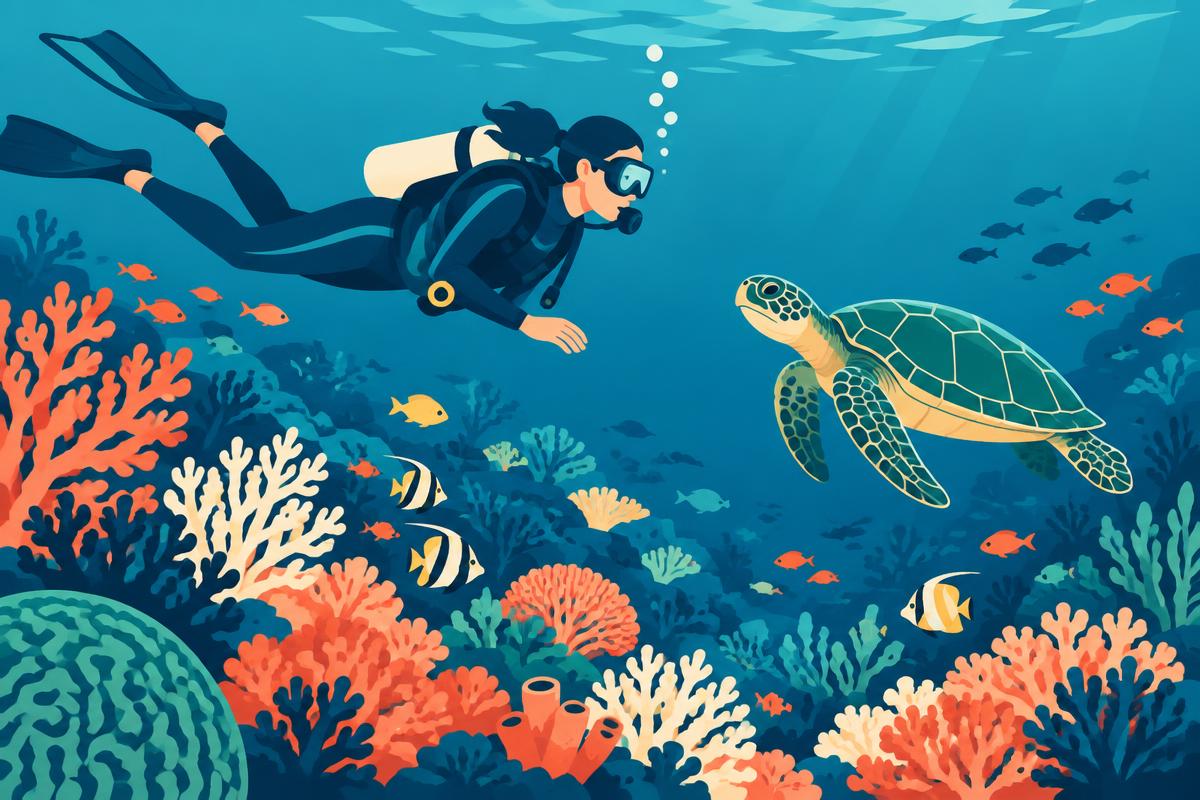
Look but don’t touch
Avoid touching coral, as even a light brush can damage the delicate polyps. Never collect shells, coral fragments, or marine life, as this disrupts the natural balance of the reef.
Buoyancy and reef health
Perfect buoyancy is the most important skill for reef conservation. Being able to hover precisely allows you to observe marine life closely without the risk of crashing into the reef.
Be mindful of your equipment; ensure all hoses and gauges are secured and not dangling. A loose gauge can drag across coral, causing lasting damage to slow-growing species.
Interacting with marine life
Keep a respectful distance from all underwater inhabitants. Chasing or harassing animals causes them stress and can lead to defensive behaviors or changes in their natural feeding habits.
Avoid feeding fish, as this disrupts their natural diet and can make them aggressive toward divers. The best interaction is one where the animal remains undisturbed in its natural environment.
Sunscreen and chemicals
Use reef-safe sunscreens to prevent harmful chemicals from entering the water. Traditional sunscreens often contain ingredients like oxybenzone that can lead to coral bleaching.
Proper disposal of waste and picking up plastic you find underwater also makes a difference. Every small action contributes to the overall health and resilience of the marine ecosystem.
Dive-day checklist
Reef etiquette guide
- Secure all equipment to prevent dangling
- Master hovering to avoid touching the bottom
- Use reef-safe sunscreen only
- Avoid chasing or touching marine animals
- Take only pictures, leave only bubbles
General guidance only. Follow your training, the dive operator’s procedures, and each manufacturer’s current instructions.
Ask the dive guide
Personal guidance for your next dive
Describe a dive scenario or an equipment-care question. The guide answers in your language and points you to relevant journal articles.
General educational guidance only. It is not medical advice, emergency instruction or a replacement for training, certification, manufacturer instructions, your operator's briefing or your dive plan.