
SMB deployment basics
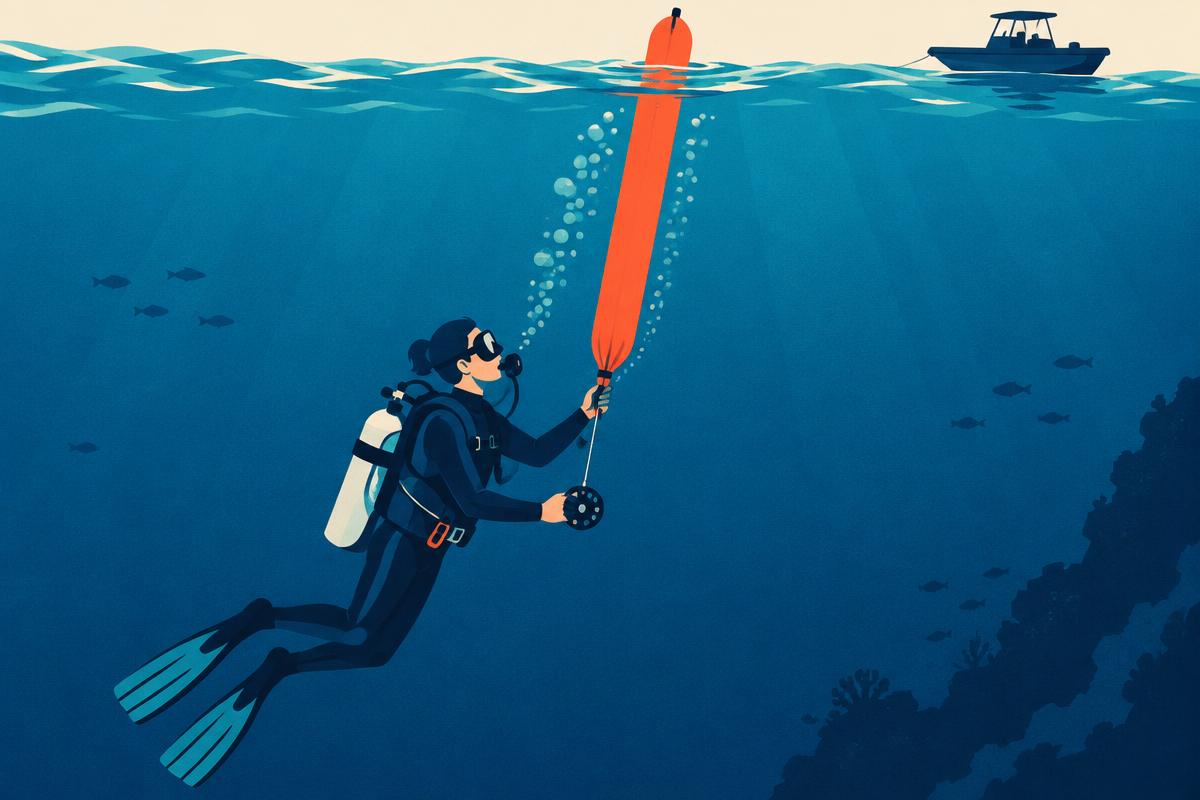
Sending up a surface marker buoy is a core signalling skill, not a trick for photographs. Calm preparation and a controlled technique keep the line from becoming the problem.
Entanglement and uncontrolled ascent are real risks
Only deploy a surface marker buoy as taught by a qualified instructor and briefed by your dive operator. Never attach the line to yourself in a way that could drag you upward, and practise under supervision before relying on the skill.
Choosing and checking gear
A surface marker buoy, a reel or spool and a low-pressure inflator hose or oral inflation method all need to be matched to your training and the dive plan. Inspect the buoy for leaks, the line for fraying and the reel for a smooth, snag-free spool before entering the water.
Store the reel where you can reach it without searching, and know exactly how your buoy inflates. A buoy you have never tested on land is not one to trust at depth for the first time.
Deploying with control
Begin in a stable position, well clear of your buddy and any overhead line. Feed a small amount of gas into the buoy, enough to start it moving, then let the line pay out as it rises rather than inflating heavily at depth.
Keep a hand on the reel and never wrap the line around your wrist, fingers or equipment. If the buoy or line snags, stop, assess calmly and free it deliberately rather than pulling hard.
After the buoy is up
Lock the reel once the buoy is on the surface and confirm the boat or shore team has seen it before continuing the dive or ascent. A marker only helps if someone is watching for it.
Rinse the buoy, line and reel in fresh water after the dive and let them dry before storage. Replace line that shows wear and check the inflation valve regularly.
Dive-day checklist
Before sending up a marker
- Confirm buoy, line and reel are in good condition
- Agree the signal and timing with your buddy and boat
- Position clear of entanglement hazards before inflating
- Never attach the line in a way that could lift you
- Rinse and dry equipment fully after the dive
General guidance only. Follow your training, the dive operator’s procedures, and each manufacturer’s current instructions.
Ask the dive guide
Personal guidance for your next dive
Describe a dive scenario or an equipment-care question. The guide answers in your language and points you to relevant journal articles.
General educational guidance only. It is not medical advice, emergency instruction or a replacement for training, certification, manufacturer instructions, your operator's briefing or your dive plan.