
BCD styles compared
Choosing a Buoyancy Control Device (BCD) is a major decision for any diver. Understanding the differences between styles helps you find the right fit for your diving goals.
BCD reliability and fit
Always ensure your BCD fits properly and doesn't restrict breathing when fully inflated. Regularly test the oral inflator and all dump valves to ensure they function correctly.
Jacket-style BCDs
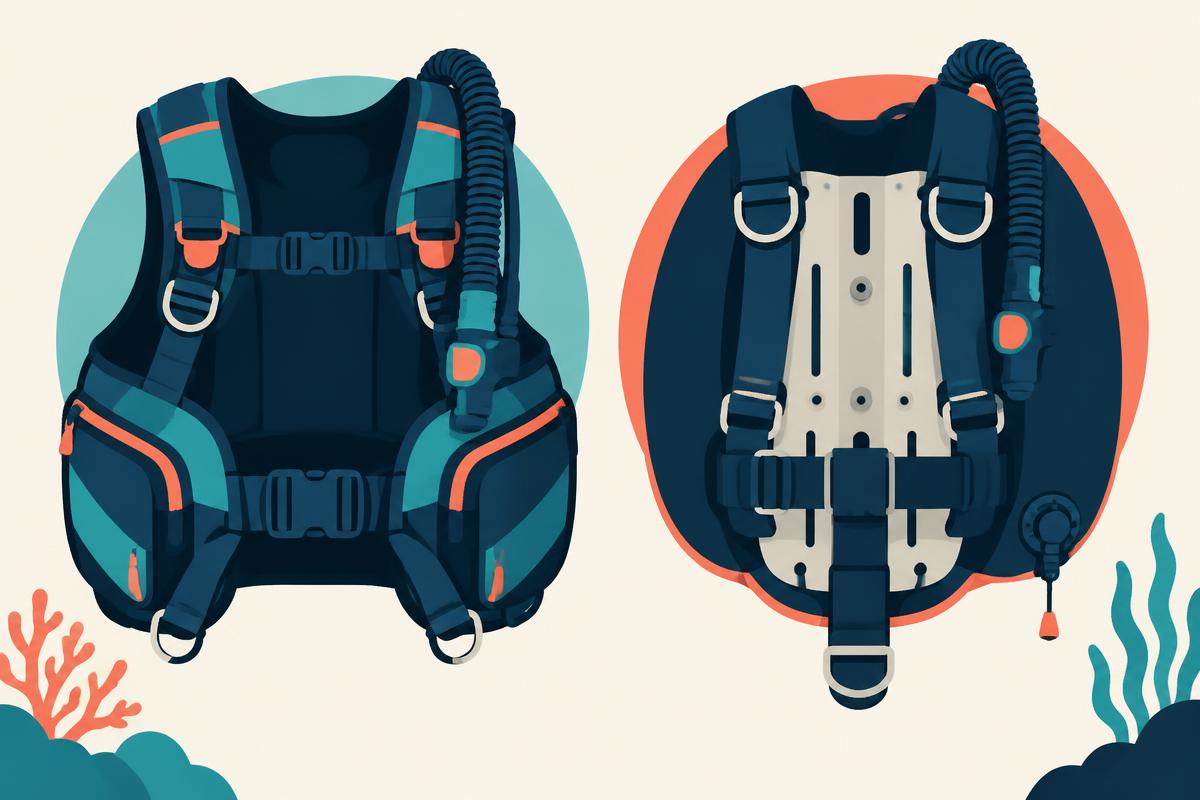
Jacket-style BCDs are the most common for recreational diving, providing air bladders that wrap around the torso. This design offers excellent stability and comfort when floating at the surface.
They often include integrated weight systems and large pockets for accessories. While versatile, they can feel bulky to some divers and may restrict movement slightly compared to other designs.
Back-inflate and wings
Back-inflate BCDs place the air bladder entirely behind the diver, which naturally promotes a horizontal trim position underwater. This can make swimming more efficient and comfortable.
Wings are often used in technical diving but are becoming popular in recreational circles. They offer a modular approach and a very clean front, though they may require more practice to maintain a vertical position at the surface.
Backplate and wing systems
Backplate and wing (BP&W) systems consist of a rigid plate, a harness, and a separate air bladder. This modular setup allows for extreme customization and durability for various diving environments.
While highly adaptable, BP&W systems can have a steeper learning curve for setup and adjustment. They are favored by divers who value minimalism and a highly streamlined configuration.
Dive-day checklist
BCD selection checklist
- Determine your preferred air placement
- Evaluate the need for integrated weights
- Check for sufficient lift capacity
- Assess comfort and range of motion
- Consider modularity for future growth
General guidance only. Follow your training, the dive operator’s procedures, and each manufacturer’s current instructions.
Ask the dive guide
Personal guidance for your next dive
Describe a dive scenario or an equipment-care question. The guide answers in your language and points you to relevant journal articles.
General educational guidance only. It is not medical advice, emergency instruction or a replacement for training, certification, manufacturer instructions, your operator's briefing or your dive plan.