
Cold-water regulator care
Cold water asks more of a regulator. Careful preparation, calm technique and disciplined drying help a suitable set perform as intended from the first breath to the final rinse.
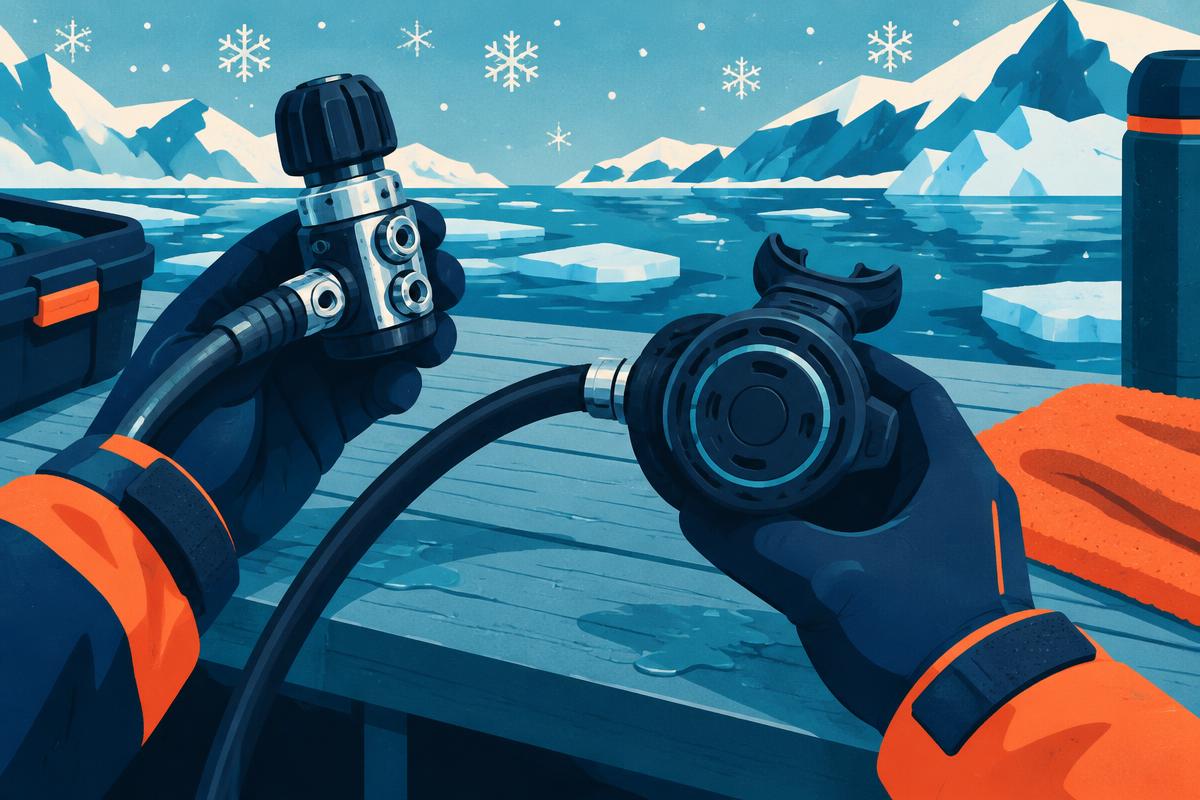
Cold-water diving starts with the right regulator
Use a regulator that its manufacturer explicitly rates for the water temperature and conditions you expect. Servicing, adjustment and internal cleaning belong with an authorised technician; never dismantle a first or second stage as routine home care.
Before the coast
A cold-water setup is a system, not a single badge on a first stage. Confirm the regulator’s temperature rating, service status and configuration against the manufacturer’s manual. An environmentally sealed first stage may reduce exposure to silt and ice, but it does not make poor gas practice harmless.
Inspect hoses for cracking, bulges and abrasion. Check mouthpieces, cable ties, exhaust valves and the second-stage casing. Make sure the dust cap is clean and completely dry before it meets the cylinder valve. If anything leaks, breathes unusually or shows damage, remove the set from service and have it examined.
Keep moisture out
Water inside the first stage can cause corrosion and can freeze during a later dive. Fit the regulator only to a clean, dry cylinder valve. Do not press the purge while the regulator is unpressurised, and do not soak an unpressurised first stage unless the manufacturer specifically permits it and the inlet is properly sealed.
Protect the set from spray, sleet and wet gloves while assembling. Pressurise it before any rinse at the site. A dry protective box is more useful than leaving the regulator exposed on a snowy bench or in a wet gear crate.
Breathe for the conditions
High gas flow cools a regulator. Avoid breathing from it on the surface in freezing air, avoid unnecessary purging and do not inflate a buoyancy device while taking a hard breath if your training and configuration allow you to stagger those demands. Enter with the system already checked, then watch your pressure and breathing effort throughout the dive.
A free-flow is not a problem to improvise around. Use the procedure taught by your agency: signal, secure a breathable gas source, control the ascent and end the dive. A buddy’s independently suitable cold-water source is part of the plan, not an afterthought.
Rinse, dry, record
After the dive, keep the first stage pressurised while giving the second stages and hoses a gentle fresh-water rinse, or follow the exact method in the manual. Work moveable controls in fresh water without forcing them. Avoid high-pressure jets and never let water enter the inlet.
Dry the set out of direct heat and sunlight, loosely coil the hoses and store it without tight bends. Note salt deposits, changes in breathing, a creeping pressure gauge or an intermittent free-flow. A short written kit log helps a technician understand what happened and prevents a questionable set returning unnoticed to the next dive.
Dive-day checklist
Before a cold-water descent
- Confirm the regulator is rated and configured for the expected temperature
- Check service date, hoses, mouthpieces and all connections
- Keep the inlet and dust cap clean and dry
- Agree free-flow and gas-sharing procedures with your buddy
- Rinse correctly, dry fully and record anything unusual
General guidance only. Follow your training, the dive operator’s procedures, and each manufacturer’s current instructions.
Ask the dive guide
Personal guidance for your next dive
Describe a dive scenario or an equipment-care question. The guide answers in your language and points you to relevant journal articles.
General educational guidance only. It is not medical advice, emergency instruction or a replacement for training, certification, manufacturer instructions, your operator's briefing or your dive plan.