
Cylinder handling and transport
A diving cylinder contains high-pressure gas that demands respect. Safe handling, secure transport and disciplined storage protect your gear and your team.
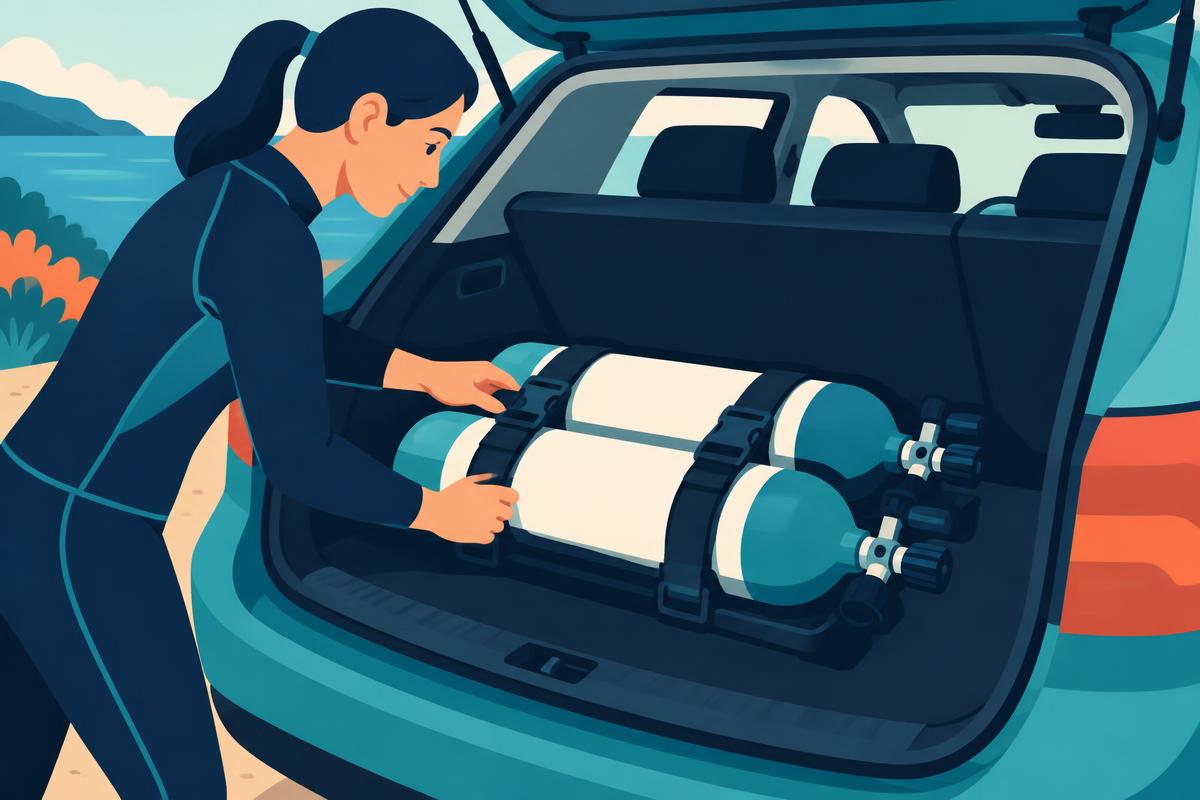
Treat cylinders as high-pressure vessels
Never leave cylinders standing unsecured; a falling cylinder can damage valves or injure people. Always transport them lying down and strapped securely to prevent movement.
Safe storage at home
Store your cylinders in a cool, dry and well-ventilated area, away from direct sunlight or heavy chemicals. Ideally, they should be kept slightly pressurised to prevent moisture from entering if the valve seal is ever compromised.
If you store them upright, use a sturdy rack or strap them to a wall. A tipping cylinder is a dangerous projectile; keep them secured at all times, whether at home or in the shed.
Transporting with care
In a vehicle, cylinders should always travel lying down. Use dedicated racks, crates or straps to prevent them from rolling or sliding during braking or turning.
Never leave cylinders in a hot car for extended periods. Heat causes pressure to rise, and while valves are designed with burst discs, the risk of unnecessary stress on the equipment is avoidable.
Handling on the boat
When you arrive at the dive site, secure your cylinder immediately. On a boat, use the designated racks, and ensure they are strapped in before the boat moves.
Handle valves with care when moving cylinders. Do not use the valve itself as a handle; grip the cylinder body and be mindful of your fingers when placing it into racks or on the deck.
Dive-day checklist
Transport and storage checks
- Secure in the vehicle lying down
- Store upright only with wall restraint
- Avoid extreme heat in cars
- Never use the valve as a handle
- Inspect valve and base for damage regularly
General guidance only. Follow your training, the dive operator’s procedures, and each manufacturer’s current instructions.
Ask the dive guide
Personal guidance for your next dive
Describe a dive scenario or an equipment-care question. The guide answers in your language and points you to relevant journal articles.
General educational guidance only. It is not medical advice, emergency instruction or a replacement for training, certification, manufacturer instructions, your operator's briefing or your dive plan.