
Save-a-dive kit
Small failures shouldn't end your day. A well-prepared save-a-dive kit keeps you in the water by addressing minor issues on the spot.
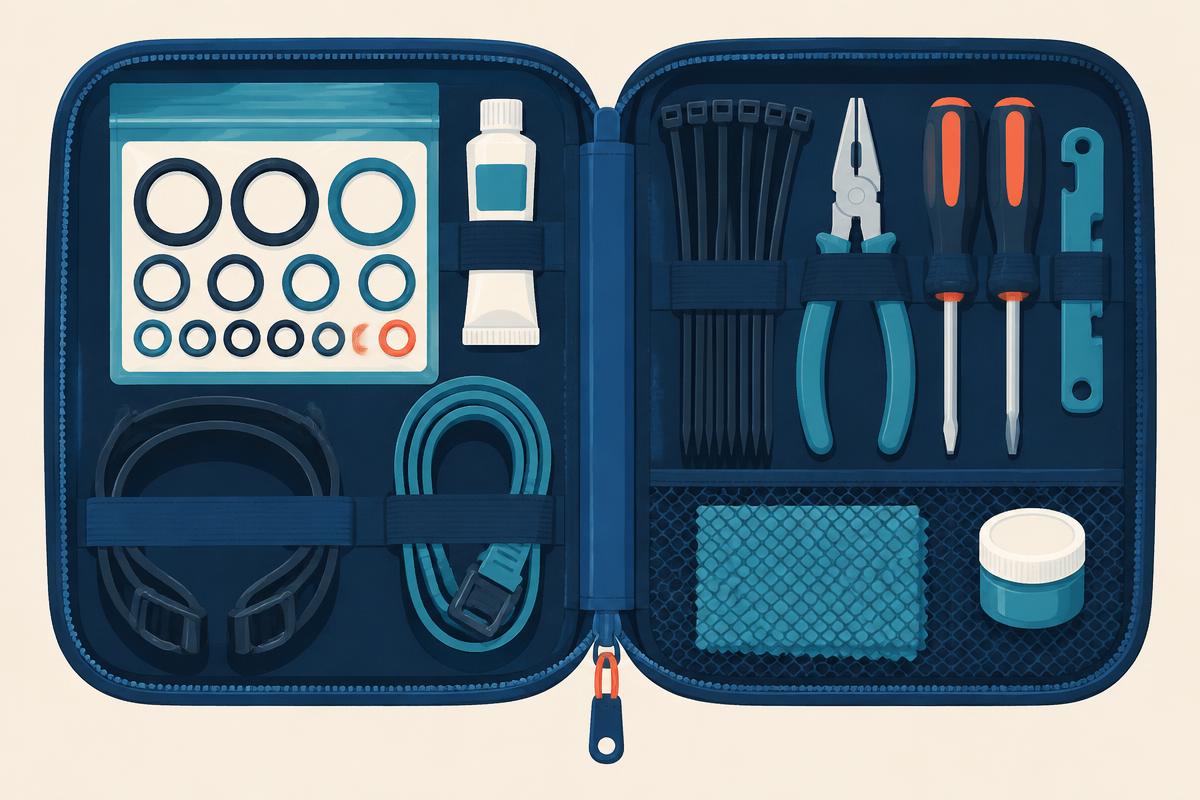
Be self-sufficient on the water
A repair kit allows you to fix minor gear issues, but it does not replace proper maintenance. If a critical component fails, do not attempt a field repair; skip the dive.
Essentials for the box
Your kit should be compact but comprehensive. Include essential spares like O-rings for tanks and hoses, a spare mouthpiece, cable ties, and basic tools like a multi-tool or small hex set.
Consider adding silicon grease, a mask strap, and a small roll of electrical tape. These items address the most common 'nuisance' failures that can otherwise force a diver to sit out.
Knowing your gear
A kit is only as good as your ability to use it. Familiarise yourself with your regulator, BCD and computer during your annual service, and know which parts are field-replaceable.
Do not experiment with repairs. If you don't know how to change a specific part, don't force it. The kit is for known, simple fixes—not for impromptu mechanics.
Keeping the kit current
Regularly check your kit. O-rings perish, grease dries out and tools can rust, especially in humid gear bags. Refresh your spares and ensure everything is clean and in working order.
When you replace your gear, update your kit. A spare part for your old mask won’t help with your new one. Keep your spares relevant to the equipment you are actually using.
Dive-day checklist
Save-a-dive essentials
- Assorted O-rings for valves and hoses
- Spare mask strap and mouthpiece
- Small multi-tool or hex key set
- Cable ties and electrical tape
- Silicone grease and a small flashlight
General guidance only. Follow your training, the dive operator’s procedures, and each manufacturer’s current instructions.
Ask the dive guide
Personal guidance for your next dive
Describe a dive scenario or an equipment-care question. The guide answers in your language and points you to relevant journal articles.
General educational guidance only. It is not medical advice, emergency instruction or a replacement for training, certification, manufacturer instructions, your operator's briefing or your dive plan.