
Cylinder Inspections and Test Dates: A Prudent Diver's Guide
Your diving cylinder is a critical piece of life-support equipment. Understanding its inspection and test dates is not just good practice, it's essential for your safety and the longevity of your gear.
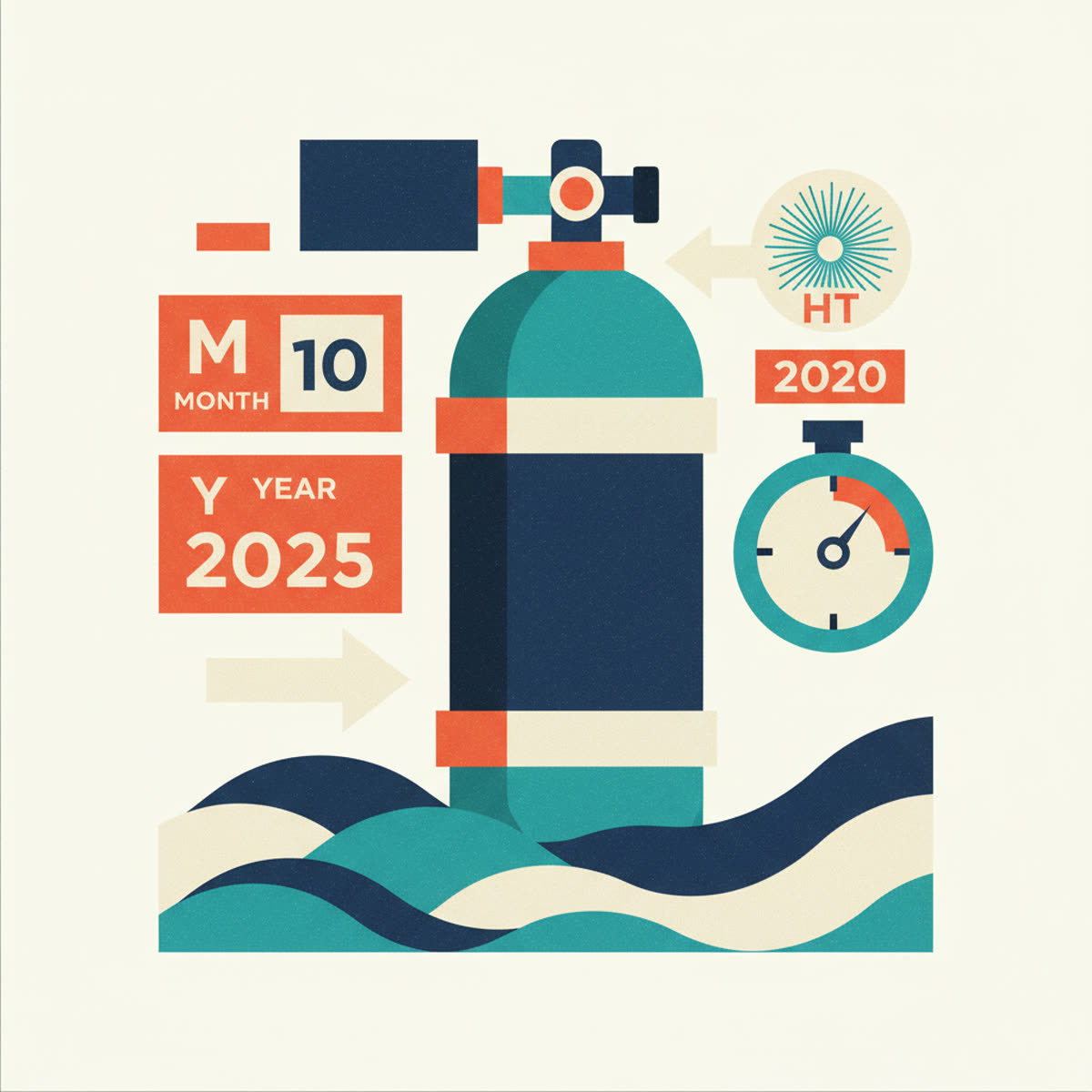
Prioritise Your Safety: Always Verify Cylinder Status
Never compromise on equipment integrity. A cylinder that is overdue for inspection or shows signs of damage poses a significant risk. Always follow manufacturer guidelines, training agency standards, and seek professional advice from certified technicians. When in doubt, do not dive.
The Foundation of Cylinder Safety: Visual and Hydrostatic Tests
Diving cylinders are high-pressure vessels, and as such, they are subject to rigorous safety standards. These standards typically involve two primary types of inspections: visual inspections and hydrostatic tests. While specific regulations can vary by region and cylinder type (e.g., steel vs. aluminium), the underlying principle is consistent: to ensure the cylinder can safely contain compressed gas.
Visual inspections are typically conducted annually by a certified technician. This involves examining both the exterior and interior of the cylinder for corrosion, pitting, cracks, dents, and any other damage that could compromise its integrity. The valve is also inspected for proper function. Hydrostatic tests, on the other hand, are performed less frequently – commonly every five years – and involve pressurising the cylinder with water to a specified test pressure, significantly higher than its working pressure, to check for expansion or permanent deformation. These tests are critical for detecting structural weaknesses that might not be visible externally.
Decoding the Stamps: Understanding Your Cylinder's History
Every certified diving cylinder bears stamped markings that provide vital information about its manufacture and inspection history. These stamps are usually located on the shoulder of the cylinder. Key information includes the manufacturer's name, serial number, material (e.g., 3AL for aluminium, HP for high-pressure steel), working pressure, and, crucially, the dates of its last hydrostatic tests. Some regions also require a visual inspection stamp.
It is your responsibility as a diver to understand these markings. Before every dive, as part of your pre-dive safety checks, take a moment to confirm that your cylinder's inspection dates are current and valid. If you are renting equipment, always verify its certification status with the dive centre. Reputable dive operations will meticulously maintain their equipment, but a quick check on your part is a prudent habit for any diver, echoing the meticulous standards Siebe Gorman has always upheld.
The Practicalities: What to Do and When to Act
Always defer to the most stringent requirements: those from the cylinder manufacturer, your training agency, and local regulations. If a cylinder is due for inspection, or if you suspect any damage, it must be taken out of service immediately and submitted to a qualified service technician. Attempting to fill or dive with an uninspected or compromised cylinder is an unacceptable risk.
When purchasing a second-hand cylinder, insist on seeing up-to-date inspection documentation. If none is available, treat it as if it is overdue for both visual and hydrostatic tests before any use. Regular maintenance extends the life of your equipment and, more importantly, safeguards your well-being. Proactive equipment management is a hallmark of a responsible diver.
Dive-day checklist
Cylinder Inspection Checklist for Every Dive
- Confirm current visual inspection date stamp.
- Verify current hydrostatic test date stamp.
- Check for external damage: dents, deep scratches, corrosion.
- Inspect valve for proper function and signs of wear.
- If renting, confirm inspection documentation with dive centre staff.
General guidance only. Follow your training, the dive operator’s procedures, and each manufacturer’s current instructions.
Ask the dive guide
Personal guidance for your next dive
Describe a dive scenario or an equipment-care question. The guide answers in your language and points you to relevant journal articles.
General educational guidance only. It is not medical advice, emergency instruction or a replacement for training, certification, manufacturer instructions, your operator's briefing or your dive plan.