
Regulator Servicing Intervals: A Prudent Diver's Guide
Your diving regulator is your lifeline underwater. Understanding and adhering to its servicing schedule is paramount for safety and reliability, ensuring every dive is as safe as it is enjoyable.
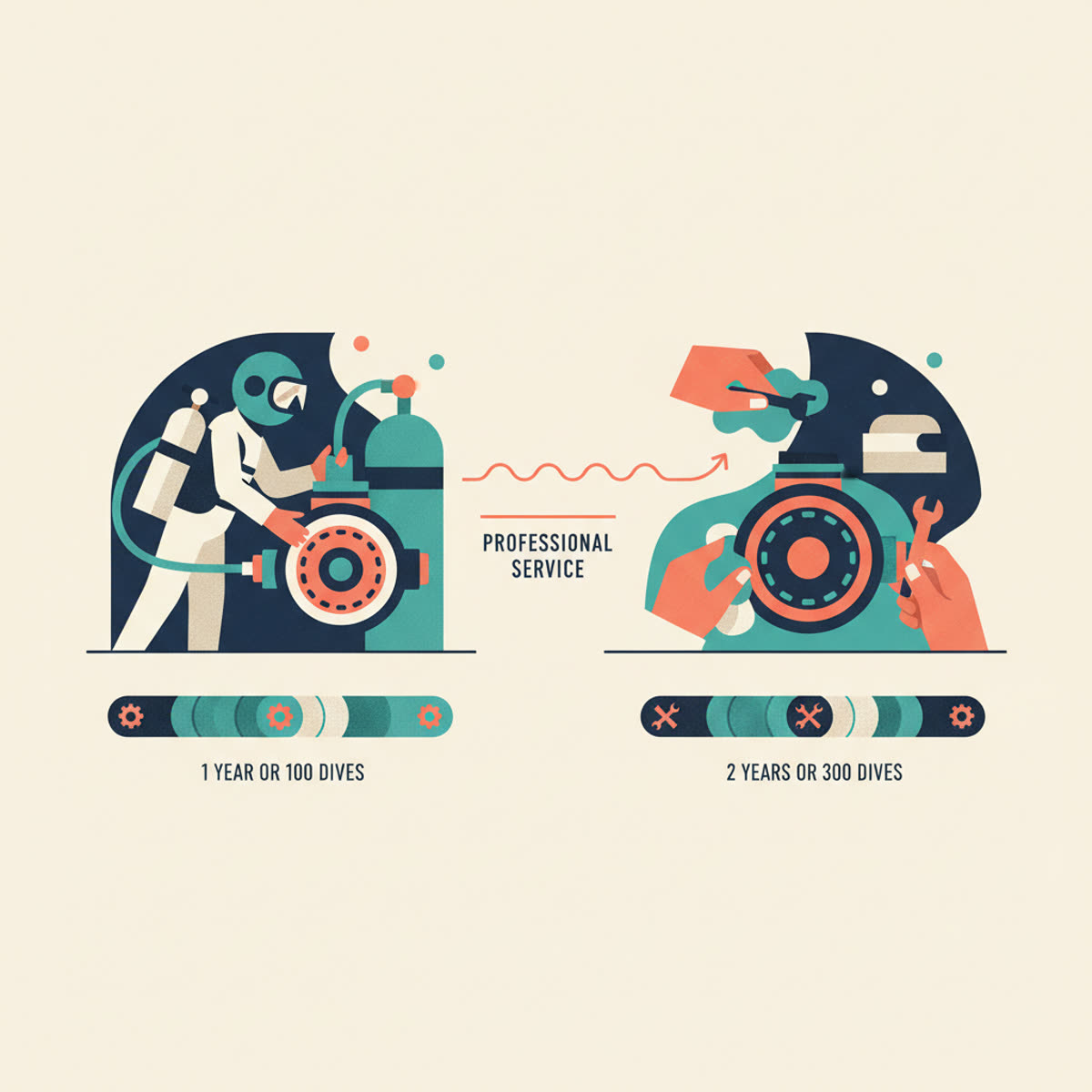
Your Regulator: The Heart of Your Underwater Life Support
The proper function of your regulator is non-negotiable. It delivers life-sustaining air and must operate flawlessly. Ignoring servicing recommendations can lead to malfunctions that compromise your safety, potentially causing an out-of-air emergency or a free-flowing regulator, either of which poses significant risks underwater.
Why Regular Servicing is Essential
Diving regulators are precision instruments subjected to extreme conditions – high pressure, salt water, chlorine, and rapid temperature changes. Over time, O-rings can degrade, springs can fatigue, and internal components can corrode or accumulate deposits. Even seemingly minor issues can escalate under pressure, leading to performance degradation or outright failure. Regular servicing involves disassembling, inspecting, cleaning, replacing worn parts, reassembling, and tuning the regulator to manufacturer specifications, restoring it to optimal working order.
This preventative maintenance prevents small issues from becoming critical failures. Think of it like servicing your vehicle's brakes; you wouldn't wait for them to fail before having them checked. Your regulator demands the same proactive attention for your safety and peace of mind on every dive.
Understanding Servicing Recommendations
The primary authority on servicing intervals is always the regulator's manufacturer. Their recommendations are based on extensive testing, material science, and engineering specifications. These typically specify an annual service or after a certain number of dives (e.g., 50-100 dives), whichever comes first. It is crucial to consult your specific regulator's manual or the manufacturer's website for their definitive guidelines. Diver training agencies universally reinforce the importance of manufacturer-recommended servicing intervals as a fundamental safety practice.
Environmental factors also play a significant role. Frequent diving in harsh conditions, such as warm, silty, or highly chlorinated water, may necessitate more frequent inspections or servicing. Similarly, prolonged storage, especially without proper post-dive care, can lead to component degradation, warranting a pre-season check even if the annual interval hasn't been reached. Always err on the side of caution.
The Role of Certified Technicians
Regulator servicing is a specialized task that requires specific tools, genuine parts, and expert knowledge. It must only be performed by technicians who are certified by the regulator manufacturer for that specific model. Attempting to service your regulator yourself or entrusting it to an uncertified individual can void warranties and, more importantly, create unsafe equipment. These certified professionals are trained to identify subtle issues, use correct torque settings, and conduct thorough performance testing.
If you notice any unusual performance – such as difficult breathing, air leaks, or persistent free-flows – have your regulator inspected immediately by a certified technician, regardless of its last service date. Do not delay, as these are potential indicators of serious underlying problems. Your life depends on its reliable operation.
Dive-day checklist
Regulator Servicing Checklist
- Consult your regulator's manufacturer manual for specific servicing intervals.
- Adhere to annual servicing or after the recommended number of dives (e.g., 50-100), whichever comes first.
- Always use a manufacturer-certified technician for all servicing and repairs.
- Rinse your regulator thoroughly with fresh water after every dive.
- Have your regulator inspected immediately if you notice any unusual performance.
General guidance only. Follow your training, the dive operator’s procedures, and each manufacturer’s current instructions.
Ask the dive guide
Personal guidance for your next dive
Describe a dive scenario or an equipment-care question. The guide answers in your language and points you to relevant journal articles.
General educational guidance only. It is not medical advice, emergency instruction or a replacement for training, certification, manufacturer instructions, your operator's briefing or your dive plan.