
Deep diving and narcosis
Nitrogen narcosis is a predictable, manageable, but unavoidable effect of breathing gas at depth. Understanding the signs helps you maintain focus and control.
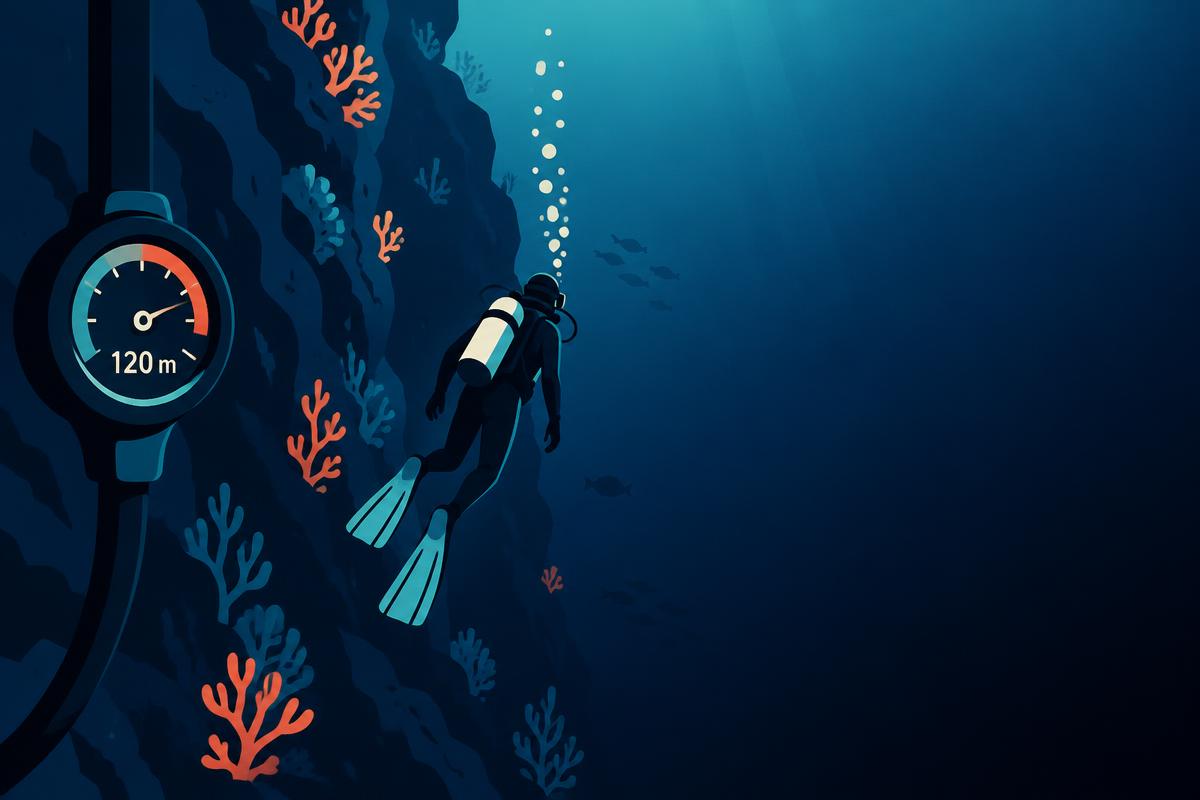
Manage narcosis through depth and discipline
Narcosis does not respect your experience or physical fitness; it is a chemical effect of breathing gases under pressure. Always adhere to depth limits established by your training agency and certification.
What happens at depth
Nitrogen narcosis occurs when nitrogen, breathed at increased partial pressure, acts on the central nervous system. Its effects are often compared to mild alcohol intoxication, though they are purely chemical and occur only while at depth.
Symptoms vary widely between individuals and even for the same diver on different days. You may feel overconfident, anxious, lethargic, or simply unable to perform tasks as efficiently as you would at the surface.
Managing the sensation
The most reliable way to mitigate narcosis is to limit your exposure to depth. Staying within the limits prescribed by your training ensures that you maintain the cognitive clarity required for safe diving.
If you feel distracted, confused or simply 'off,' pause, check your gauges and communicate with your buddy. Ascending just a few metres can rapidly reverse the symptoms, allowing you to re-evaluate your plan.
Buddy awareness
Your buddy is your best monitor for narcosis. If they start making unusual mistakes, moving erratically or responding slowly, assume they may be affected by the environment, not just poor technique.
Make the decision to ascend early. It is always better to end a dive prematurely than to press on while you or your buddy are struggling with the effects of depth.
Dive-day checklist
Signs to watch for
- Slow reaction times or confusion
- Loss of focus on the task at hand
- Overconfidence or reckless behaviour
- Inability to read or interpret gauges
- Anxiety or unexpected distress
General guidance only. Follow your training, the dive operator’s procedures, and each manufacturer’s current instructions.
Ask the dive guide
Personal guidance for your next dive
Describe a dive scenario or an equipment-care question. The guide answers in your language and points you to relevant journal articles.
General educational guidance only. It is not medical advice, emergency instruction or a replacement for training, certification, manufacturer instructions, your operator's briefing or your dive plan.