
The discipline of a dive log
A logbook is more than a souvenir. Recorded consistently, it becomes a record of what actually happened, useful for training, equipment care and your own judgement.
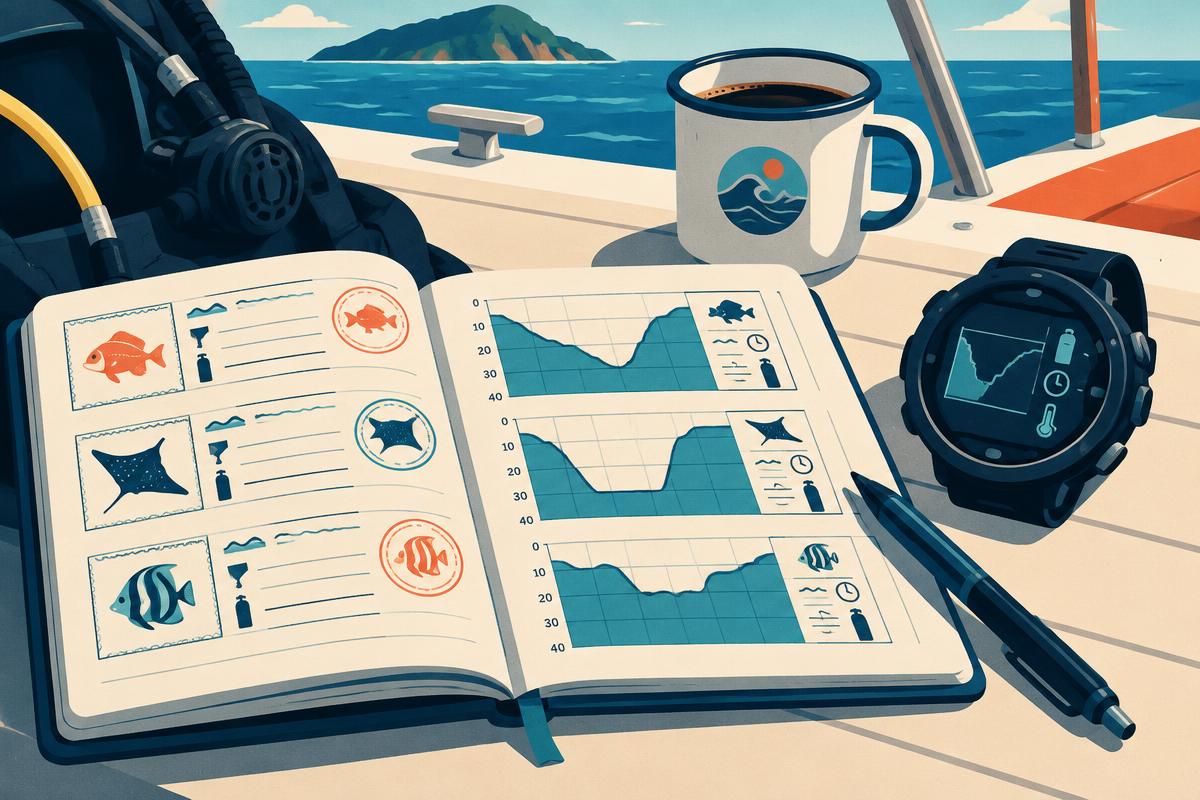
A log supports judgement, it does not replace training
Use your logbook alongside, not instead of, your training and your dive computer’s data. Report any irregular dive, equipment issue or health concern to appropriate professionals rather than relying on personal notes alone.
What to record
Beyond depth and time, note visibility, water temperature, current, gas used and remaining, and any equipment issues. These details build a more useful picture than numbers alone and help you notice patterns over time.
Record how you felt during the dive, including exertion, cold or any discomfort. This habit can reveal small warning signs well before they become a problem on a future dive.
Why consistency matters
A log kept after every dive, rather than occasionally, becomes a reliable reference for your own experience level when choosing future dives or courses. Many certification progressions and some operators also ask to see a logged dive history before specific dives.
Logging equipment serial numbers, fills and any maintenance performed alongside each dive creates a useful record if a technician or operator needs to understand your gear’s history.
Using the log well
Review your log before a new season or a trip to recall what sites, conditions or configurations worked well for you, and to identify skills you have not practised recently.
If you use a dive computer, keep its downloaded data alongside your written notes rather than relying on memory to reconcile the two later. The combination gives a clearer picture than either alone.
Dive-day checklist
After every dive
- Record depth, time, conditions and gas used
- Note how you felt, including exertion or discomfort
- Record equipment issues and maintenance performed
- Log consistently rather than occasionally
- Keep computer data alongside written notes
General guidance only. Follow your training, the dive operator’s procedures, and each manufacturer’s current instructions.
Ask the dive guide
Personal guidance for your next dive
Describe a dive scenario or an equipment-care question. The guide answers in your language and points you to relevant journal articles.
General educational guidance only. It is not medical advice, emergency instruction or a replacement for training, certification, manufacturer instructions, your operator's briefing or your dive plan.