
Post-dive equipment rinse
A thorough rinse after every dive is the simplest thing that extends the life of a kit. A consistent routine, not an occasional effort, is what actually protects it.
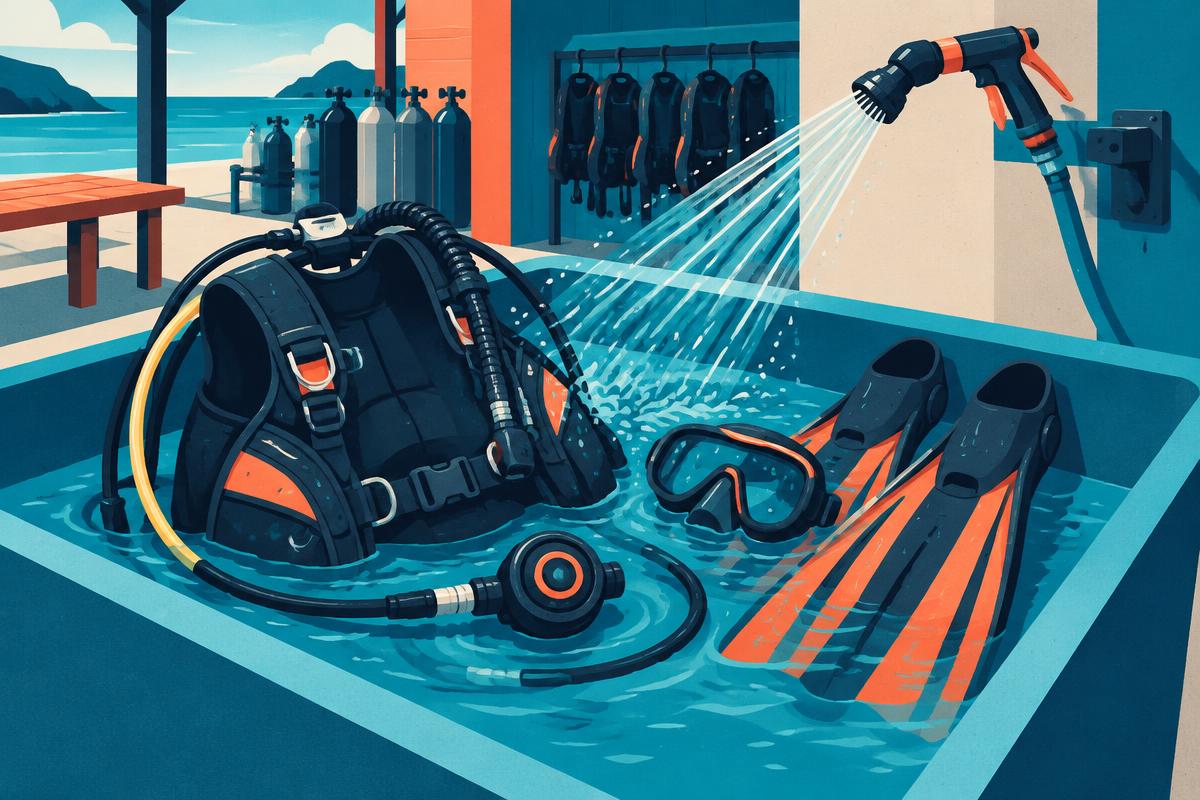
Rinsing is maintenance, not a substitute for servicing
A good rinse habit keeps gear in better condition but does not replace manufacturer-recommended servicing. Have regulators, BCDs and other life-support equipment serviced by an authorised technician on schedule.
Why rinsing matters
Salt crystals, sand and organic residue left to dry on equipment accelerate wear on seals, zippers and moving parts. A fresh-water rinse soon after a dive removes most of this before it sets in.
This matters as much for a weekend hire set as for personal gear; equipment that is well cared for between users performs more predictably for everyone who relies on it.
A simple routine
Rinse the regulator with the dust cap on and the first stage still pressurised if the manufacturer allows it, working second stages gently in fresh water. Rinse the BCD inside and out, including the bladder through the inflator, and let trapped water drain fully.
Rinse mask, fins, boots and exposure suit, paying attention to zippers, buckles and seals. A soft brush helps on textured surfaces without risking wear from scrubbing too hard.
Drying and storage
Dry equipment away from direct sun and heat, which degrade rubber and fabric over time. Hang wetsuits and drysuits on wide hangers rather than wire, and store the BCD partially inflated to keep the bladder from creasing.
Check zippers, valves and straps for wear while you handle the gear during this routine; a small issue spotted early is a quick fix, while one ignored can become a dive-day failure.
Dive-day checklist
After every dive
- Rinse the regulator with dust cap on, pressurised if permitted
- Flush the BCD bladder through the inflator and drain fully
- Rinse mask, fins, boots and exposure suit thoroughly
- Dry everything away from direct sun and heat
- Inspect zippers, valves and straps for wear while rinsing
General guidance only. Follow your training, the dive operator’s procedures, and each manufacturer’s current instructions.
Ask the dive guide
Personal guidance for your next dive
Describe a dive scenario or an equipment-care question. The guide answers in your language and points you to relevant journal articles.
General educational guidance only. It is not medical advice, emergency instruction or a replacement for training, certification, manufacturer instructions, your operator's briefing or your dive plan.