
Drysuit care between dives
A drysuit lasts longer when seals, valves and the zip get attention before they become a problem.
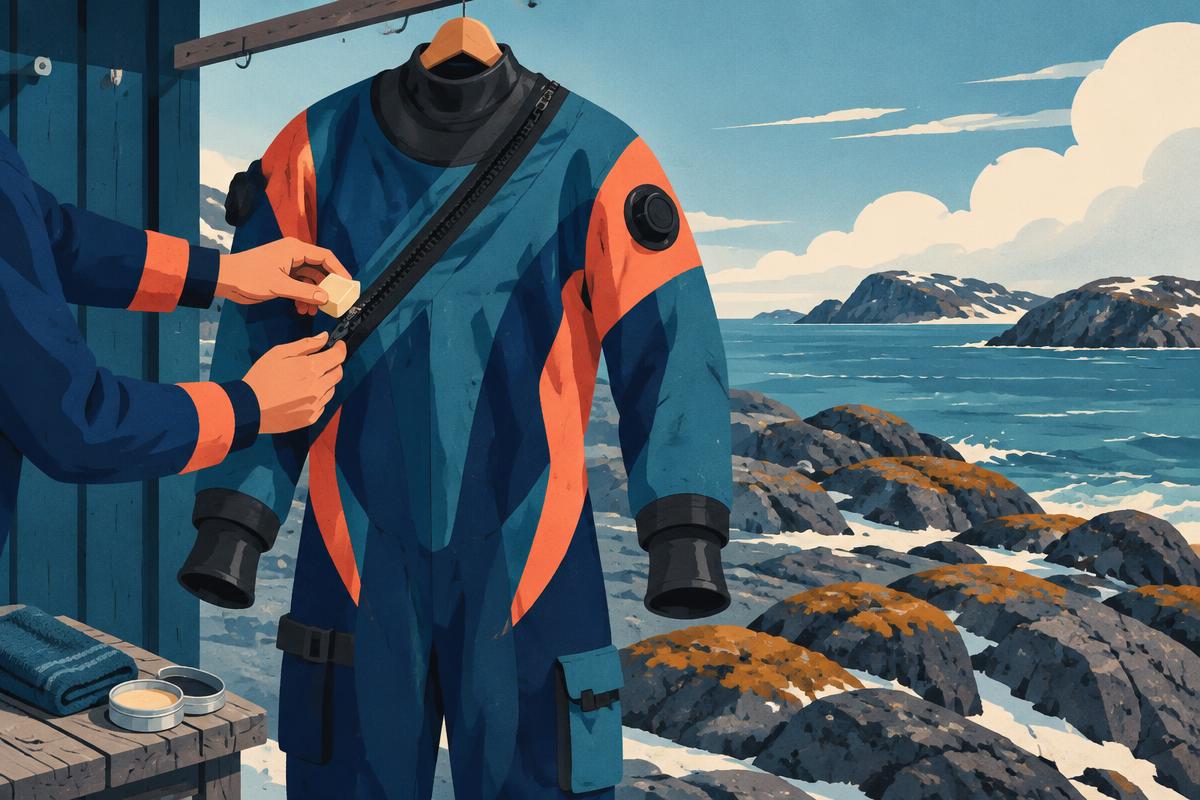
A leak is a reason to stop
Follow your suit maker’s instructions for cleaning, lubrication and inspection. Do not dive with a damaged zip, failing seal or suspect valve; have repairs and pressure tests done by a qualified service centre.
Inspect before packing
Run your eyes over neck and wrist seals for nicks, tackiness or splits. Check boots, seams and the zip path for abrasion. Inspect inflation and exhaust valves according to the maker’s instructions and confirm the inflation hose connects securely.
A quick look in good light is more useful than discovering a leak on the boat. If a seal or valve looks doubtful, use another suit or postpone the dive until it is checked.
Rinse and dry
After salt water, rinse the outside with fresh water, especially the zip, seals and valve surrounds. Rinse the inside only as your suit maker directs. Avoid harsh cleaners, high heat and prolonged direct sunlight.
Let the suit dry fully, including boots and inside surfaces. Open the zip only as directed and keep grit away from its teeth or sealing surfaces. Apply only the zip treatment specified for that exact zip type.
Store without stress
Store the suit clean and dry with the zip in the position recommended by its manufacturer. Avoid tight folds, sharp edges and weights pressing on seals. A wide hanger or loose fold works only if the maker permits it.
Keep a note of damp areas, sticky valves or changes in fit. Small observations help a service centre locate faults before the next trip.
Dive-day checklist
Before the next dive
- Inspect seals, seams, boots and zip
- Check valves and hose connection
- Rinse and dry inside and out as directed
- Use the correct treatment for the zip type
- Have any suspected leak assessed professionally
General guidance only. Follow your training, the dive operator’s procedures, and each manufacturer’s current instructions.
Ask the dive guide
Personal guidance for your next dive
Describe a dive scenario or an equipment-care question. The guide answers in your language and points you to relevant journal articles.
General educational guidance only. It is not medical advice, emergency instruction or a replacement for training, certification, manufacturer instructions, your operator's briefing or your dive plan.