
Packing lighter for the Red Sea
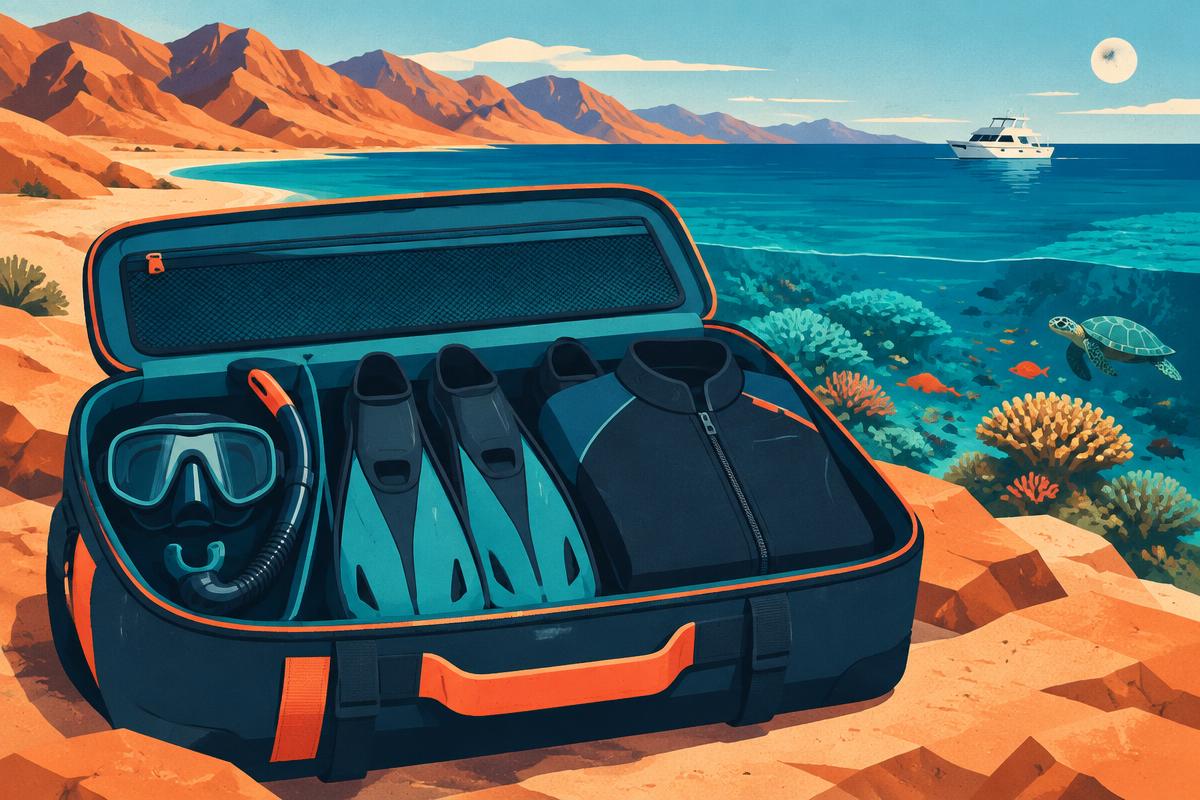
Pack around the dives you have booked, not every dive you can imagine. A compact, deliberate kit leaves room for spares that genuinely protect a Red Sea trip.
Plan for the operator and the season
Conditions vary between northern reefs, offshore marine parks, shore sites and seasons. Confirm water temperature, currents, exposure protection, cylinder valves, required safety equipment and luggage rules directly with your operator and airline before departure.
Start with the itinerary
A resort week, shore diving and a liveaboard do not need the same bag. Read the itinerary for water temperature, current, entry method and number of dives. Offshore routes may reward a surface marker buoy, reel and exposure layer that feel excessive on a sheltered house reef, while a liveaboard sharply limits opportunities to replace a forgotten part.
Ask what is reliably included: cylinders, weights, clips, towels and charging space all change the list. Check whether DIN or yoke valves are standard and whether an adaptor is available. Specific answers let you remove duplicates without removing resilience.
Carry the personal fit
Prioritise items whose fit or familiarity affects the dive: mask, prescription lenses, computer and exposure protection. A regulator is another sensible personal item when you know its service history and it suits the planned conditions. Rental buoyancy devices and fins can save considerable weight if you are comfortable using them.
Keep critical equipment, documents, medication and one set of lightweight dive clothing in cabin baggage where airline rules permit. Batteries and rechargeable devices must follow current airline requirements; spare lithium batteries normally need protected terminals and cabin carriage.
Build a small repair pouch
A useful save-a-dive pouch is modest: the correct mask and fin straps, mouthpiece with ties, manufacturer-approved O-rings for user-serviceable connections, anti-fog, a small wet-notes pencil and any model-specific charging lead. Tools belong only where the operator and manufacturer permit user adjustment.
Do not pack an improvised workshop. Internal regulator work, buoyancy-device repairs and cylinder-valve work require trained staff and correct parts. Tell the crew about a fault rather than turning a moving boat into a service bench.
Make the bag work twice
Choose clothing that layers and dries quickly. A light long-sleeved layer works on deck, in air-conditioned spaces and against the sun. A refillable bottle, secure sunglasses and a hat often earn their space more than another evening outfit. Reef-safe behaviour matters more than a label: avoid touching coral, control buoyancy and follow local guidance on sun products.
Use fins and a buoyancy device to protect smaller items inside the hold bag, but keep hard edges away from masks and instruments. Photograph the packed equipment and serial numbers, weigh both bags at home, and leave deliberate capacity for wet gear on the return journey.
The final reduction
Lay everything out by function: life support, fit, exposure, signalling, charging, documents and clothing. Remove anything duplicated by a dependable operator, then ask what single failure each spare solves. This makes the bag lighter without making the dive plan brittle.
The aim is not the smallest possible bag. It is a clear kit in which every item has a job, is compatible with the rest and can be found on a rolling deck before the briefing ends.
Dive-day checklist
Before closing the bag
- Confirm itinerary, temperature, valves and included rental equipment
- Keep mask, computer, documents and medication accessible
- Protect battery terminals and follow current airline rules
- Pack only compatible, user-replaceable spares
- Weigh the bags and reserve room for damp return gear
General guidance only. Follow your training, the dive operator’s procedures, and each manufacturer’s current instructions.
Ask the dive guide
Personal guidance for your next dive
Describe a dive scenario or an equipment-care question. The guide answers in your language and points you to relevant journal articles.
General educational guidance only. It is not medical advice, emergency instruction or a replacement for training, certification, manufacturer instructions, your operator's briefing or your dive plan.