
Emergency oxygen basics
Prompt administration of oxygen is a critical first-aid step for diving injuries. Knowing how to set up and use emergency oxygen can be lifesaving.
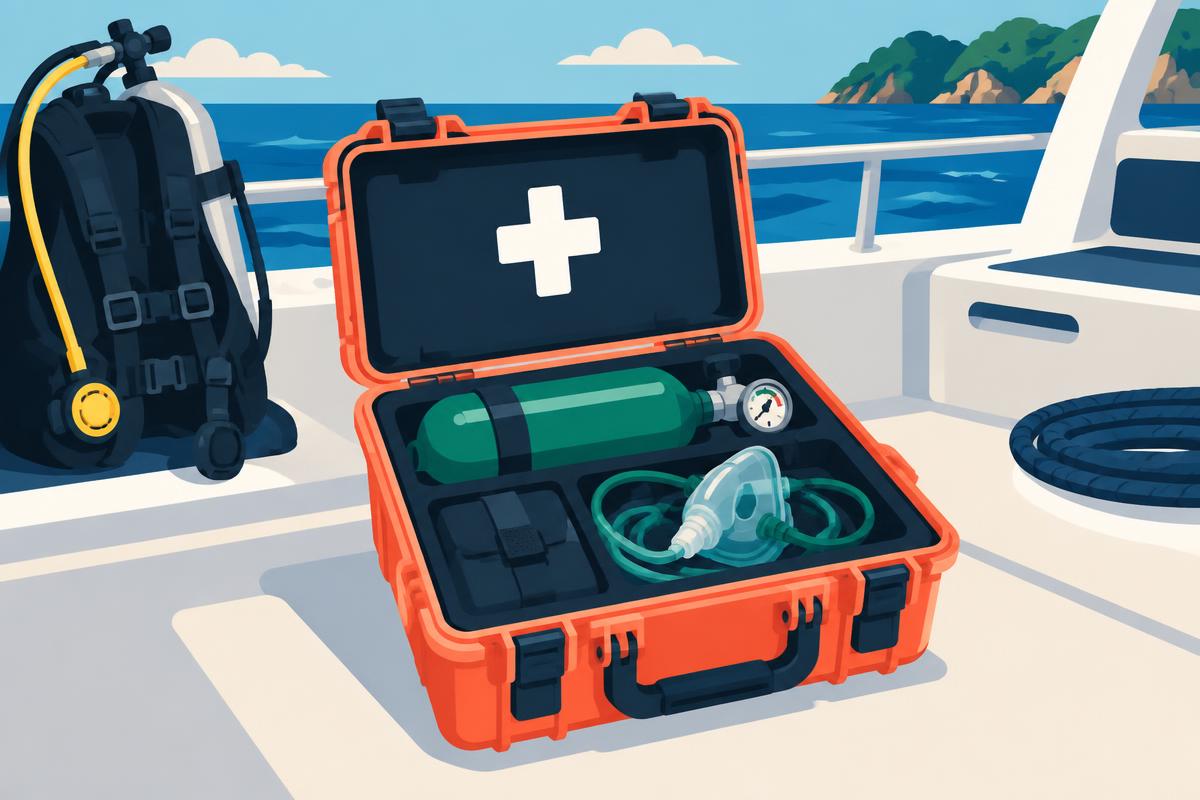
Always follow training
Only administer oxygen if you are trained to do so. Ensure the oxygen kit is serviced and ready for use before every dive.
When to use oxygen
Oxygen is indicated for any diver showing signs of decompression illness or lung overexpansion injury. Do not delay administration while waiting for a professional diagnosis.
Even if you are unsure, if a diver shows symptoms after a dive, consider oxygen and consult with emergency medical personnel.
Setting up the kit
Familiarize yourself with the specific kit used by your dive operator or that you carry yourself. Ensure all connections are secure and the cylinder is turned on.
Select the correct mask type, whether a non-rebreather or demand valve, based on the diver’s level of consciousness and local protocols.
Monitoring the patient
While administering oxygen, monitor the diver’s level of consciousness and breathing. Be prepared to provide additional support as needed.
Keep the patient warm and comfortable while waiting for professional medical transport.
Dive-day checklist
Oxygen kit checklist
- Verify oxygen cylinder level
- Check that the mask and tubing are intact
- Ensure the regulator is correctly attached
- Review operating instructions before the dive
- Practice setup periodically
General guidance only. Follow your training, the dive operator’s procedures, and each manufacturer’s current instructions.
Ask the dive guide
Personal guidance for your next dive
Describe a dive scenario or an equipment-care question. The guide answers in your language and points you to relevant journal articles.
General educational guidance only. It is not medical advice, emergency instruction or a replacement for training, certification, manufacturer instructions, your operator's briefing or your dive plan.