
Enriched air nitrox basics
Nitrox can extend no-decompression limits, but it demands its own checks. A short course and disciplined analysis make the gas an asset rather than a hazard.
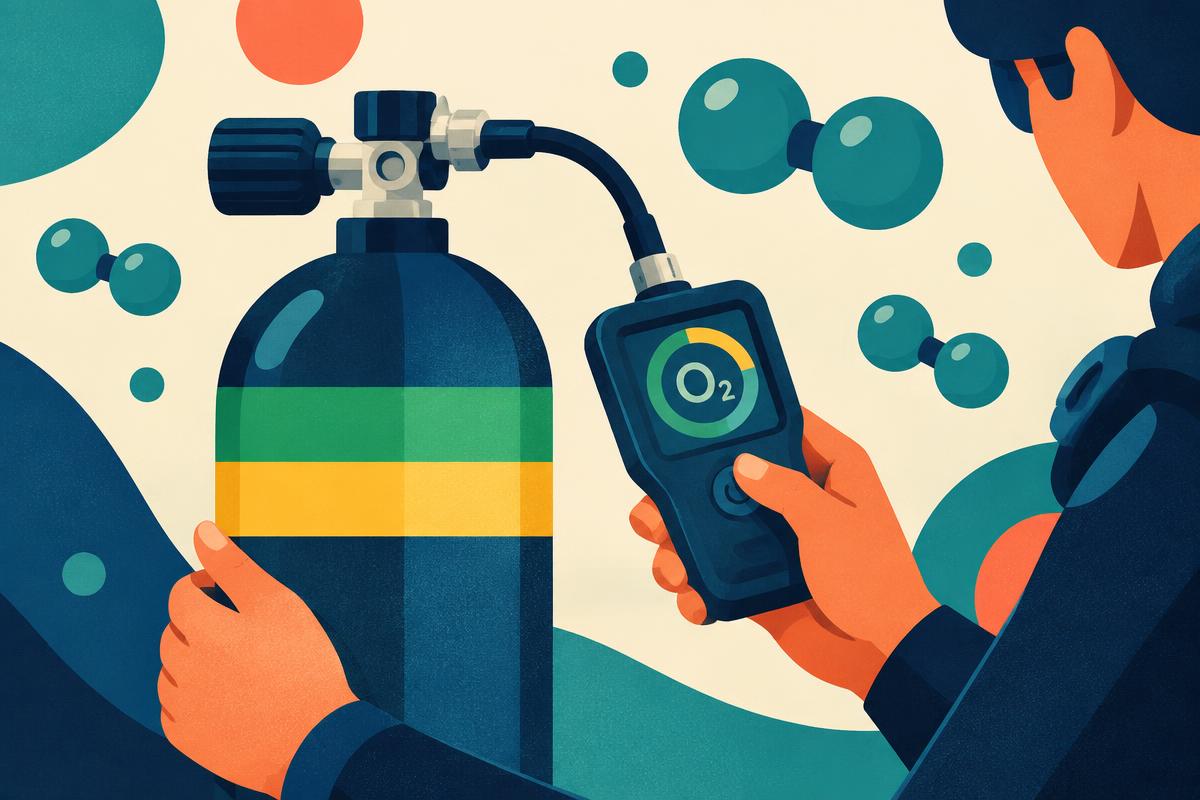
Nitrox requires specific training and gas analysis
Do not breathe enriched air nitrox without certified training. Analyse every cylinder yourself before every dive, set your computer to the correct oxygen percentage, and respect the maximum operating depth for that mix.
Why divers use it
A higher oxygen percentage reduces the inert gas loading at a given depth and time compared with air, which can extend no-decompression limits or add a margin of conservatism. It does not make a dive deeper, longer in every respect, or inherently safer without the right planning.
Many operators offer nitrox as a standard option, but using it correctly requires certification that covers analysis, planning and oxygen exposure limits, not just the willingness to breathe a different gas.
Analysing your gas
Analyse every cylinder yourself immediately before diving, even if it was filled and labelled by the operator. Use a calibrated analyser, record the percentage on the cylinder and set your dive computer accordingly.
Never assume a cylinder’s label is correct or that a previous fill matches the current one. A mismatch between the gas you breathe and the setting on your computer undermines the calculations it provides.
Planning within limits
Each nitrox mix has a maximum operating depth set by oxygen exposure limits, which your course will teach you to calculate and respect. Going beyond that depth increases the risk of oxygen toxicity, so plan conservatively and mark the limit clearly on your dive plan.
Track cumulative oxygen exposure across multiple dives in a day, particularly on multi-day trips, and follow your training agency’s guidance and tables rather than improvising.
Dive-day checklist
Before a nitrox dive
- Hold current nitrox certification before using the gas
- Analyse every cylinder yourself before diving
- Set the dive computer to the verified oxygen percentage
- Confirm and respect the maximum operating depth
- Track cumulative oxygen exposure across the day
General guidance only. Follow your training, the dive operator’s procedures, and each manufacturer’s current instructions.
Ask the dive guide
Personal guidance for your next dive
Describe a dive scenario or an equipment-care question. The guide answers in your language and points you to relevant journal articles.
General educational guidance only. It is not medical advice, emergency instruction or a replacement for training, certification, manufacturer instructions, your operator's briefing or your dive plan.