
Underwater navigation fundamentals
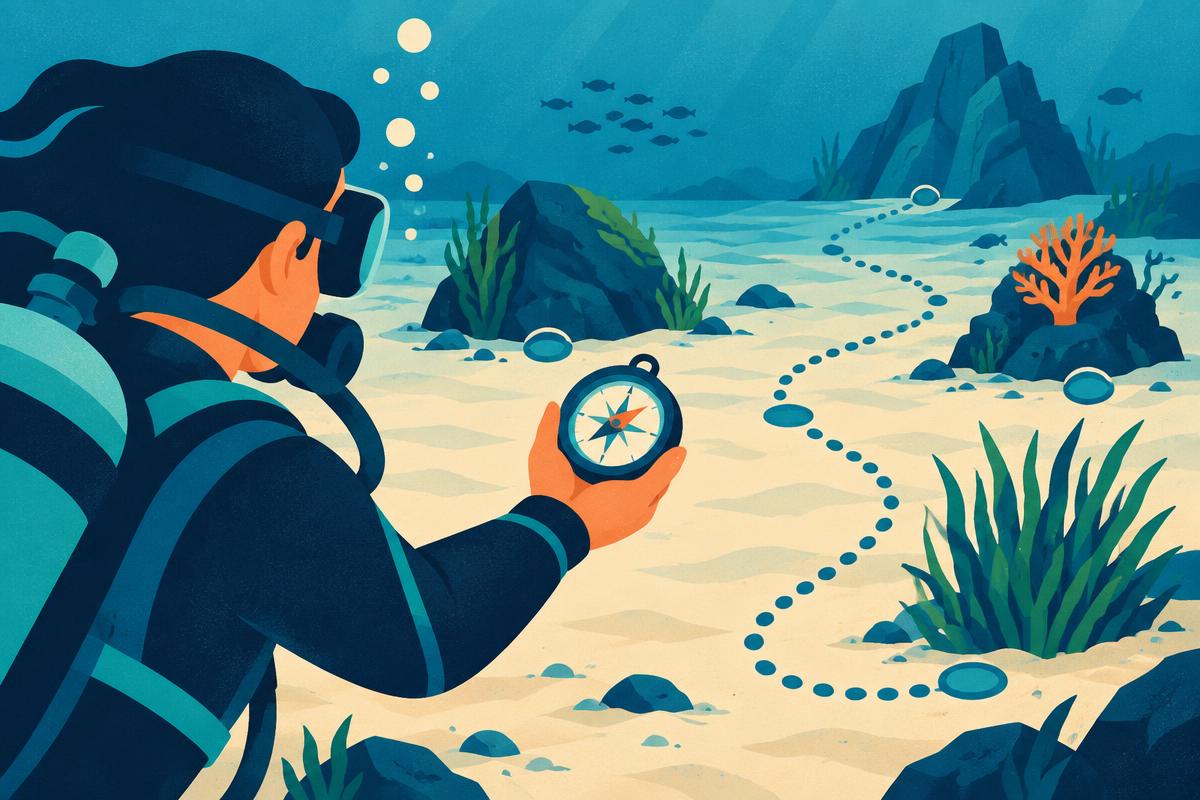
Finding your way underwater is mostly about attention and a simple compass habit, kept up throughout the dive rather than consulted once at the start.
Navigation supports, but does not replace, a dive plan
Practise compass and natural navigation with a qualified instructor before relying on it to find an exit or boat. Always carry a backup plan for returning to the surface safely if navigation is uncertain.
Setting a baseline
Before descending, note the entry point’s bearing, the direction of any current and natural features such as slopes, sand patterns or light direction that can help orient you later. A quick look at a site map, if available, is worth the time.
Set your compass heading on the surface where it is easiest to read calmly, and confirm it with your buddy before beginning the dive.
Navigating through the dive
Check your compass periodically rather than only once, since currents and distractions can shift your course gradually. Combine compass headings with natural references like the sun’s direction, slope angle or a reef edge for a more reliable sense of position.
Count fin kicks or elapsed time on simple legs if your training includes this, and keep the navigation plan conservative rather than attempting a complex route on an unfamiliar site.
If you become unsure
Stop, signal your buddy and reassess calmly rather than guessing and continuing. Many sites allow a safe ascent to check surface position if that fits your plan and remaining gas and time.
A delayed surface marker buoy, if you are trained to use one, can mark your position for a boat while you resolve navigation at a safe depth.
Dive-day checklist
Before navigating underwater
- Note entry bearing, current direction and natural landmarks
- Set and confirm the compass heading on the surface
- Check the compass periodically throughout the dive
- Combine compass and natural navigation cues
- Agree a plan for what to do if you become unsure of position
General guidance only. Follow your training, the dive operator’s procedures, and each manufacturer’s current instructions.
Ask the dive guide
Personal guidance for your next dive
Describe a dive scenario or an equipment-care question. The guide answers in your language and points you to relevant journal articles.
General educational guidance only. It is not medical advice, emergency instruction or a replacement for training, certification, manufacturer instructions, your operator's briefing or your dive plan.