
Lighting for underwater photography
Water absorbs color and light rapidly as you descend. Understanding how to use strobes and video lights is key to restoring the vibrant colors of the underwater world.
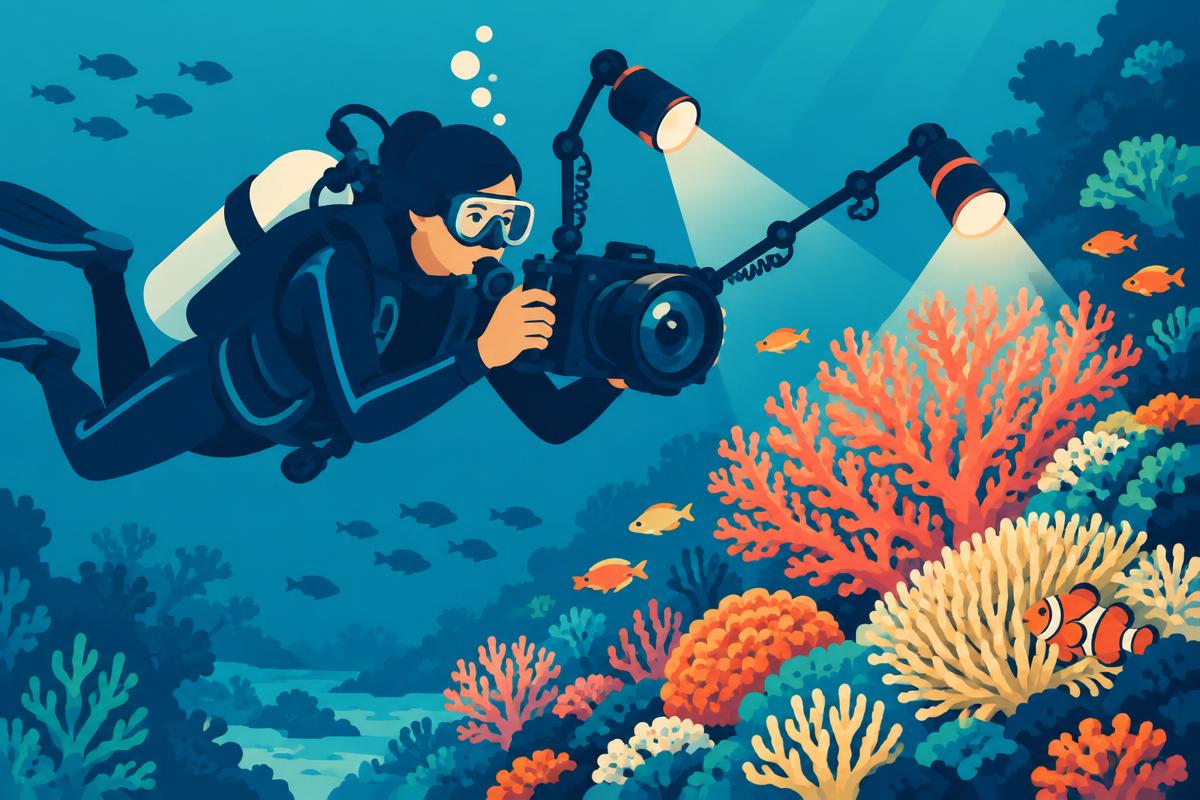
Buoyancy comes before the camera
Never let your photography equipment distract you from monitoring your gas, depth, and buddy. Ensure you have excellent buoyancy control before adding a camera to your gear.
The loss of color
Water acts as a giant blue filter, absorbing red light first, followed by orange and yellow. By only five meters depth, much of the red spectrum is already lost to the surrounding water.
Artificial light sources like strobes or powerful video lights are necessary to bring these colors back. They allow you to capture the true brilliance of coral and marine life as they appear at the surface.
Strobes vs. video lights
Strobes (flashes) provide a powerful burst of light that freezes movement and is ideal for still photography. They are generally more effective at longer distances than continuous video lights.
Video lights provide a constant beam, making it easier to see exactly where the light falls and how it affects the scene. They are essential for videography but can also be used for macro photography.
Positioning for success
Proper light positioning is critical to avoid 'backscatter,' where light reflects off particles in the water. Positioning your strobes out and slightly behind the camera lens helps minimize this effect.
Experiment with different angles to create depth and shadows in your images. Lighting from the side can highlight textures and details that might be washed out by direct, head-on lighting.
Dive-day checklist
Lighting checklist
- Check battery levels for all lights and strobes
- Ensure strobe arms and clamps are secure
- Position lights to minimize backscatter
- Test fire strobes before entering the water
- Always prioritize buoyancy over the shot
General guidance only. Follow your training, the dive operator’s procedures, and each manufacturer’s current instructions.
Ask the dive guide
Personal guidance for your next dive
Describe a dive scenario or an equipment-care question. The guide answers in your language and points you to relevant journal articles.
General educational guidance only. It is not medical advice, emergency instruction or a replacement for training, certification, manufacturer instructions, your operator's briefing or your dive plan.