
Wreck diving basics
Wrecks are fascinating windows into history, but they present unique challenges. Approaching a wreck requires careful buoyancy and an awareness of the environment.
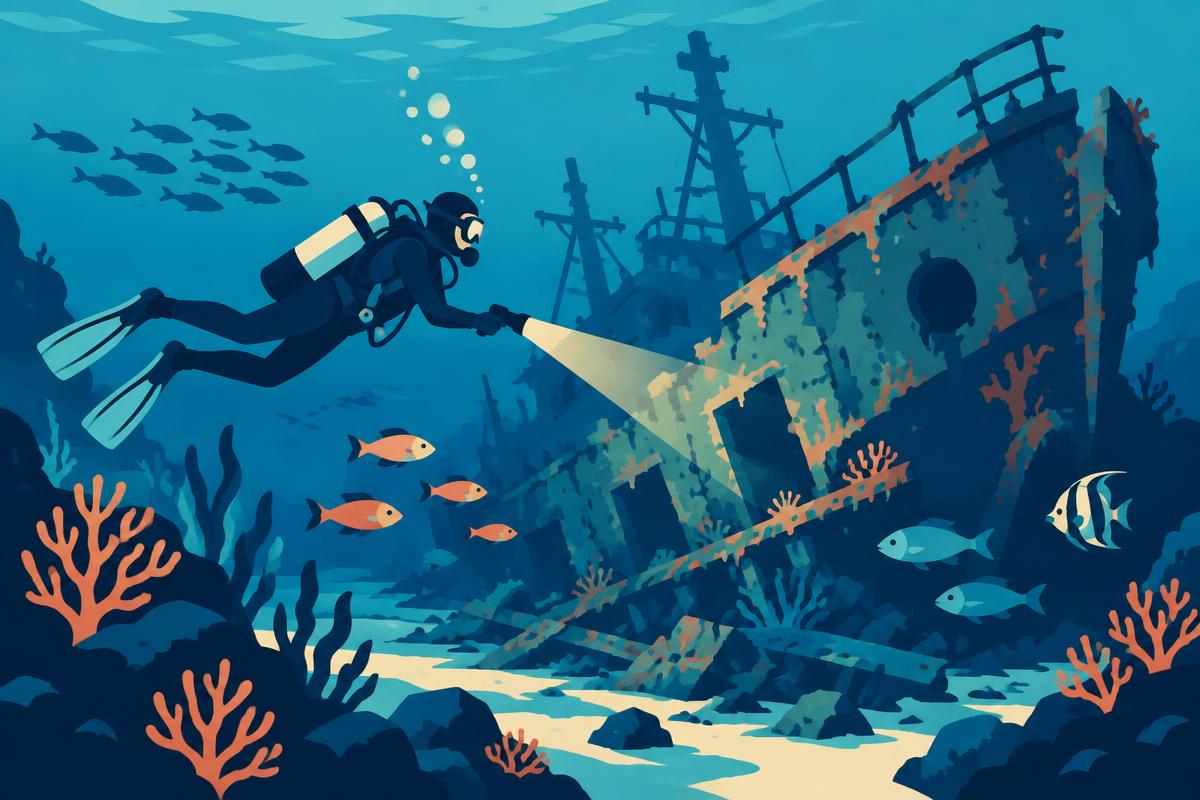
Stay on the outside
Recreational wreck diving should focus on external observation; never enter a wreck without specific overhead-environment training and equipment. Watch for sharp edges, entanglement hazards, and unstable structures.
Buoyancy and propulsion
Maintaining precise buoyancy is critical when diving around wrecks. Silt and sediment can easily be disturbed by improper finning, reducing visibility for everyone in the group.
Use the frog kick to keep your wash directed away from the wreck’s surfaces. This technique helps preserve the site and prevents the accidental stirring of silt that often accumulates on sunken structures.
Hazard awareness
Wrecks are often home to sharp metal, fishing lines, and fragile marine life. Move slowly and stay at a safe distance to avoid snagging your equipment or causing damage to the site.
Be mindful of currents that can surge around and through the structure. Always plan your approach to stay up-current of any potential hazards or entanglement risks identified during the briefing.
Respecting history
Treat every wreck as a historical site and a marine sanctuary. Avoid touching or removing anything, as these structures are often delicate and legally protected in many jurisdictions.
Observing from a distance allows you to appreciate the scale and history of the vessel. Taking photos is a great way to preserve the memory without disturbing the natural and historical balance of the site.
Dive-day checklist
Wreck diving prep
- Verify overhead-environment training status
- Identify potential entanglement hazards
- Practice frog kicking to avoid silting
- Maintain a safe distance from sharp edges
- Observe and respect the local wreck laws
General guidance only. Follow your training, the dive operator’s procedures, and each manufacturer’s current instructions.
Ask the dive guide
Personal guidance for your next dive
Describe a dive scenario or an equipment-care question. The guide answers in your language and points you to relevant journal articles.
General educational guidance only. It is not medical advice, emergency instruction or a replacement for training, certification, manufacturer instructions, your operator's briefing or your dive plan.